
Turn £1,200–£7,000 into an Itemised Walk In Shower Quote for UK Homes
Compare UK walk in shower price bands (£1,200–£7,000), spot hidden costs, and use a contractor-backed checklist to get an itemised quote.
Turn £1,200–£7,000 into an Itemised Walk In Shower Quote for UK Homes
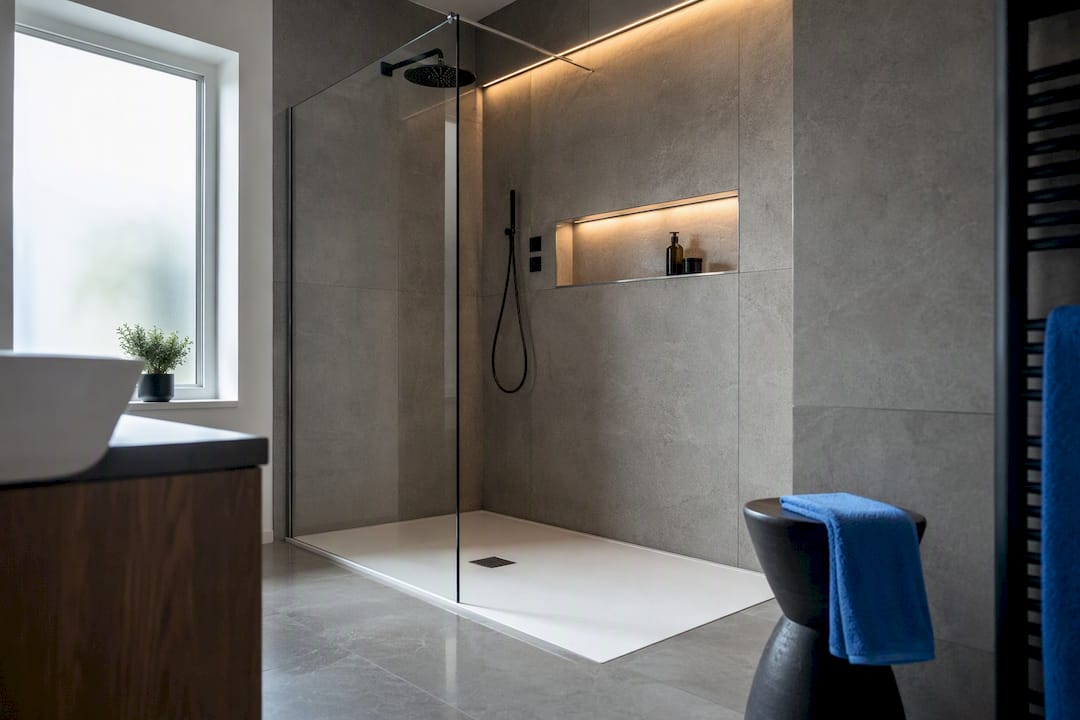
Most straightforward walk-in shower installations typically fall within a moderate price range, with simpler budget conversions at the lower end and full wet-room builds costing significantly more. The band you land in depends on whether you’re doing a simple swap or a bespoke level-access job with drainage changes. Get at least two written, itemized quotes before you commit a number to your renovation budget.
TL;DR:
- Most walk-in shower installations fall within a range of roughly £1,200 to over £7,000, depending on scope and customization, with wet rooms being the most expensive.
- Labor costs typically account for 30% to 50% of the total, and low labor percentages in quotes may indicate shortcuts on waterproofing or tiling.
- “Walk-in” labels do not always mean level access; options vary from tray-based setups to full wet-room conversions, affecting cost and accessibility features.
- Hidden costs such as bath removal, joist repairs, and drainage rerouting can significantly increase the final bill beyond initial estimates.
- Obtain a detailed, written quote separating supply, labor, and contingency, and verify waterproofing methods and insurance coverage before proceeding.
Table of Contents
- What Does a Walk-In Shower Cost at Each Price Point?
- What Do the Individual Components Actually Cost?
- Which Type of Walk-In Shower Fits Your Bathroom and Budget?
- What Hidden Costs Push Quotes Above the Estimate?
- How Long Does a Walk-In Shower Installation Take?
- Can You Get VAT Relief or a Grant for a Walk-In Shower?
- How Do You Get a Quote You Can Actually Trust?
- Our Approach to Pricing and Project Delivery
- Ready to Turn Your Budget Into a Written Quote?
- Sources
- FAQ
What Does a Walk-In Shower Cost at Each Price Point?
Think of walk-in shower pricing as four rough tiers, each covering a different scope of work rather than just a different shower tray.
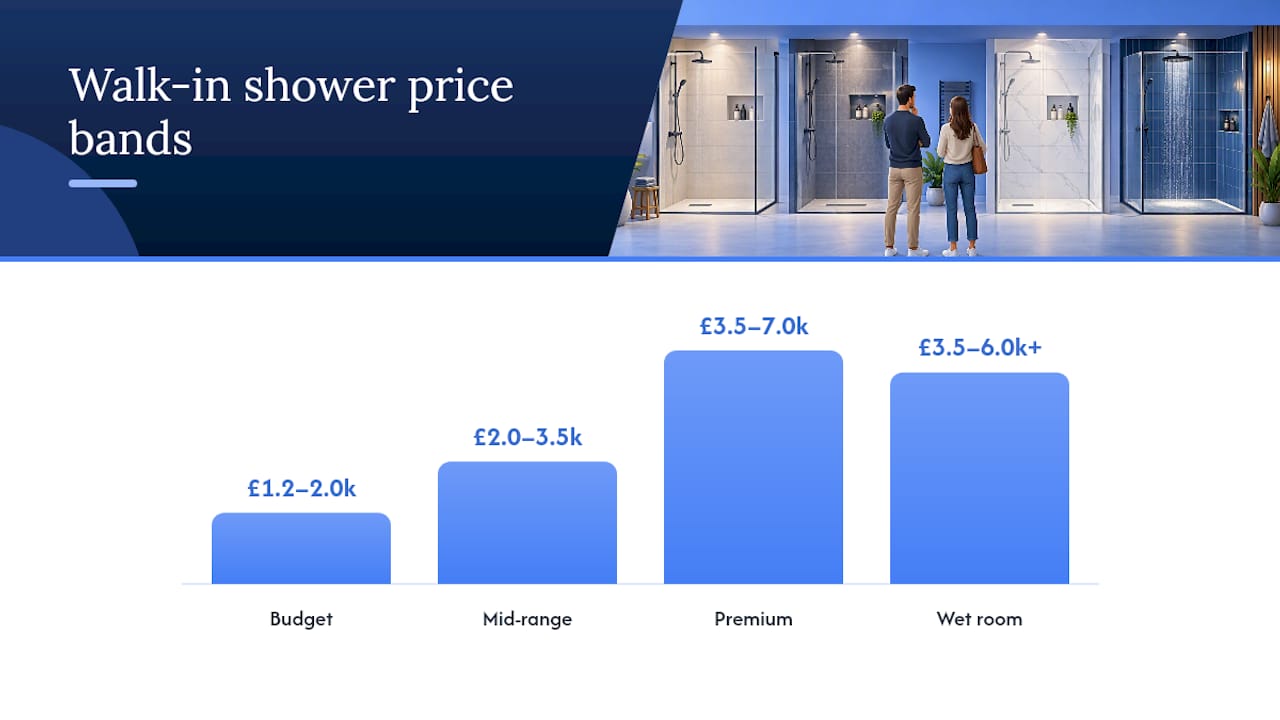
At the budget end, £1,200 to £2,000 typically buys a simple shower enclosure fitted where a bath used to sit, using a standard tray, basic glass panel, and existing plumbing runs. Mid-range jobs, roughly £2,000 to £3,500, usually add better glassware, a quality thermostatic valve, and full tiling rather than patch repairs. The Checkatrade cost guide puts a typical straightforward supply-and-install project at £2,100 to £2,500, which lines up with what most Cardiff homeowners see quoted for a like-for-like bath-to-shower swap.
Premium installs push past £3,500 once you’re specifying large format tiles, a linear drain, bespoke glass, or moving the waste pipe to a new position. Full wet-room conversions, where the whole floor is tanked and tiled level with the rest of the bathroom, start around £3,500 and climb toward £6,000 or beyond according to Less.
- Budget (£1,200–£2,000): standard tray, basic screen, existing pipework reused
- Mid-range (£2,000–£3,500): upgraded valve, full retile, sometimes a larger tray
- Premium (£3,500–£7,000): bespoke glass, linear waste, altered drainage runs
- Wet room (£3,500–£6,000+): full tanking, level floor, no tray at all
What Do the Individual Components Actually Cost?
A quote is only as good as the line items behind it, and most homeowners never see the breakdown unless they ask for it. Labor typically accounts for 30% to 50% of the finished project, according to Homebuilding’s cost analysis, with materials making up the remainder. That split matters because a “cheap” quote with unusually low labor hours often means shortcuts on waterproofing or tiling prep.
Here’s roughly what each component costs on its own:
- Shower tray: £100 to £400 for standard sizes; low-profile or wet-room formers run higher
- Glass panel or enclosure: £150 to £600 depending on size and glass thickness
- Shower valve (mixer or thermostatic): £80 to £350, with concealed digital valves at the top end
- Tiling: £40 to £90 per square meter, including adhesive and grout, before labor
- Linear drain (wet room style): £150 to £400 for the channel and grate alone
- Waste and pipework alterations: £100 to £500 depending on how far the waste needs to move
- Electrician (if rewiring an extractor fan or shaver point): £150 to £300 for a half-day visit
Statistic to bookmark: if your written quote shows labor under 25% of the total, ask why. Genuine waterproofing and tiling work rarely comes in that cheap, and it’s one of the clearest red flags in a lowball estimate.
Which Type of Walk-In Shower Fits Your Bathroom and Budget?
Not every “walk-in” shower is built the same way, and the label gets used loosely by installers and manufacturers alike.
A tray-based walk-in shower sits on top of the existing floor with a low-profile tray, usually 30 to 40 millimeters high. It’s the cheapest and fastest option because it rarely disturbs the subfloor or drainage, and it’s the closest like-for-like swap for an old bath.
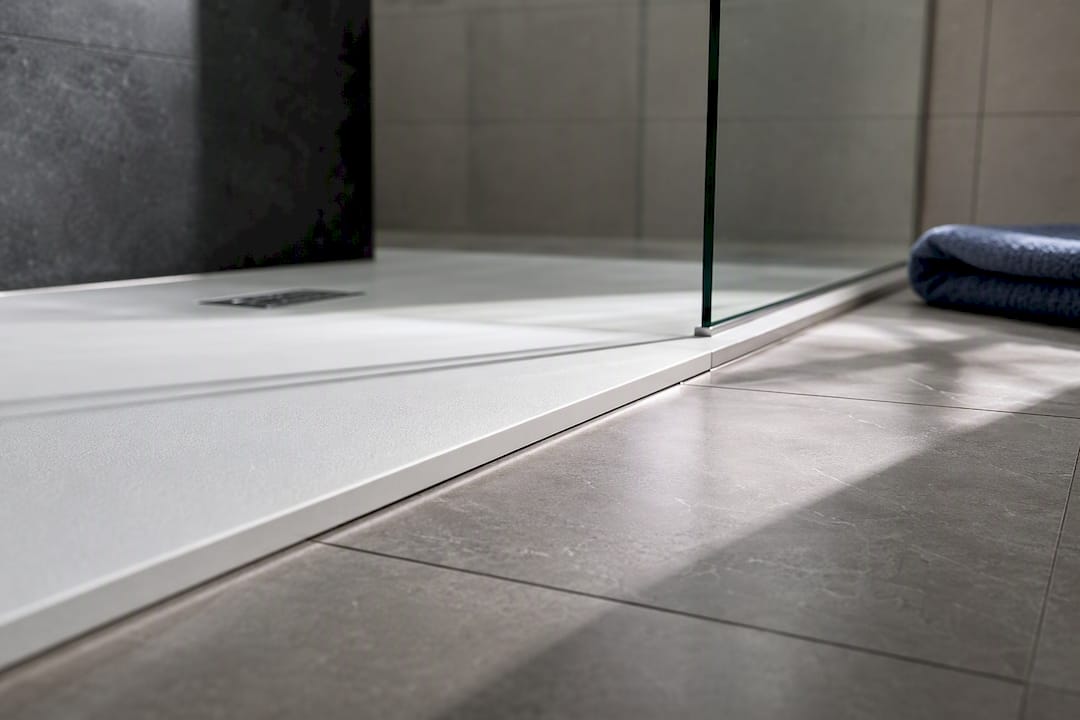
A low-threshold shower uses a slightly recessed tray or a shallow upstand, giving a near-level step. This often needs some floor build-up or a shallow dig, which adds labor but stays short of full tanking.
A level-access shower removes the step entirely, requiring the floor to be lowered or built up around a wet-room former, plus new falls toward the drain. Costs here start climbing toward the £5,000 to £13,000 range covered in our level access shower cost guide, especially where joists need adjusting.
A full wet room tanks the entire floor and walls, ditches the tray altogether, and uses a linear or point drain set into a screeded floor. This is the most flexible option for wheelchair or carer-assisted use, and our wet room cost guide breaks down what drives that higher price further.
- Tray-based: fastest, cheapest, minimal disruption
- Low-threshold: modest floor work, small step remains
- Level-access: floor lowered or built up, no step
- Wet room: full tanking, complete floor rebuild
Pro Tip: A “walk-in” label doesn’t guarantee level access. Define whether you need a shallow step, full wheelchair transfer, or carer-assisted use before you choose products, or you risk paying twice when the wrong tray gets fitted.
What Hidden Costs Push Quotes Above the Estimate?
Most budget overruns happen after the old bath comes out and the installer sees what’s actually underneath the floor.
Bath removal and disposal alone can add £50 to £150, especially with a cast iron bath or awkward access through a narrow doorway. Joist repair or subfloor replacement is the bigger risk. Older Cardiff and Vale of Glamorgan properties often hide rot or undersized joists once boards come up, and that can add several hundred pounds and a day or two to the schedule.
Drainage relocation is another common surprise. Moving a waste pipe more than a meter or two, or dealing with a slow-falling soil stack, can mean extra groundwork that wasn’t visible during the initial site visit.
- Bath removal and skip/disposal fees: £50–£150
- Rotten or undersized joists needing replacement: several hundred pounds, plus 1–2 extra days
- Drainage or waste pipe rerouting: variable, often the single biggest overrun
- Electrical upgrades for extractor fans or lighting: £150–£300
Build in a contingency of 10% to 15% on top of your quoted price, and ask your installer to specify in writing how they’ll price unforeseen work if they find it, rather than agreeing a figure verbally on site.
How Long Does a Walk-In Shower Installation Take?
Timelines vary more by scope than by property size, and the biggest swing factor is what gets found once the old suite comes out.
- Simple tray swap (no layout change): 1 to 2 days
- Bath-to-shower conversion: 3 to 5 working days, including tiling and drying time
- Full wet room conversion: 5 to 7 working days, sometimes longer with underfloor heating or complex tanking
According to Less.co.uk’s project data, delays most often come from discoveries made after opening up the bathroom rather than from the install itself. Material lead times matter too. Bespoke glass panels or specific tile ranges can take two to three weeks to arrive, so order early if you have a fixed moving-in or completion date.
Can You Get VAT Relief or a Grant for a Walk-In Shower?
Some accessibility-led installations qualify for VAT relief or grant funding, but neither applies automatically just because you’re fitting a walk-in shower.
VAT relief on building work applies where the adaptation is genuinely for a disabled person’s needs, and HMRC’s own guidance treats eligibility as conditional on the person and the purpose of the work, not the product itself. Confirm your situation against the VAT relief guidance for disabled adaptations before assuming a reduced rate applies to your invoice.
Disabled Facilities Grants, administered by local authorities, can help fund adaptations like level-access showers for eligible applicants. Details on the process and qualifying criteria sit on the Disabled Facilities Grants page, and your local council handles the actual assessment and award.
- Check VAT eligibility with HMRC before budgeting a reduced rate
- Apply for a Disabled Facilities Grant through your local council, not the installer
- Related mobility-adaptation VAT rules are explained in this stairlift VAT exemption guide, which covers similar exemption logic
- Never assume grant or VAT relief until you have written confirmation
None of this reduces your baseline planning figure. Budget the full cost first, then treat any relief or grant as a bonus that lowers the final invoice.
How Do You Get a Quote You Can Actually Trust?
The single best thing you can do before signing anything is insist on a written, itemized schedule of works rather than a one-line total.
Ask your installer to separate supply costs, labor, waste disposal, VAT, and contingency into distinct lines. This is the only way to compare two quotes fairly, since one contractor’s “£2,200” might include tiling and disposal while another’s excludes both. According to Checkatrade’s guidance on quoting traps, comparing a product-only price against a full installed price is one of the most common ways homeowners underestimate their real spend.
Confirm the waterproofing method being used, whether it carries a manufacturer warranty, and who’s responsible if a leak shows up in two years. Also check proof of public liability insurance and ask for references from recent local jobs, ideally ones you can see in person.
- Get a written schedule with supply, labor, disposal, VAT, and contingency shown separately
- Ask what waterproofing system is used and whether it’s guaranteed
- Request proof of insurance and at least two local references
- Treat a suspiciously low quote with no breakdown as a warning sign, not a bargain
Pro Tip: If two quotes differ by more than 20% for the same scope, ask both installers to walk you through their itemized schedule side by side. The gap usually reveals what one of them left out, not who’s overcharging you.
Our Approach to Pricing and Project Delivery
We work across Cardiff and the Vale of Glamorgan, and the pricing patterns above match what is generally seen on real jobs week to week. A straightforward bath-to-shower conversion tends to sit in the budget-to-mid band, while accessible or wet-room builds move into higher territory once floor levels and drainage change. We survey the site first, then provide a fixed, itemized quote so the client knows exactly what’s supply, what’s labor, and what’s contingency before any work starts.
— James
Ready to Turn Your Budget Into a Written Quote?
The walk-in shower job is handled as one accountable team, not a chain of subcontractors and showroom sales staff, which is where most of the hidden extras discussed above tend to creep in. Bath-to-shower conversions, full wet-room installs, tiling, and waterproofing work are covered, with fixed pricing agreed before work starts rather than a moving target once the floor comes up.
If you’re ready to move past estimating and get real numbers, book a site survey and we’ll provide a written, itemized quote with a realistic timeline attached. Start with our bathroom renovation Cardiff page, where full renovations including walk-in shower installs typically run £2,500 to £4,000 depending on scope, and get in touch to arrange your survey.
Sources
- Walk-In Shower Installation Cost in 2026: UK Prices
- Walk-In Shower Cost 2026 | UK Price Guide | Less
- VAT relief on certain building work if you have a disability
- Walk-in shower costs — Homebuilding advice
FAQ
How Much Does a Walk-In Shower Cost in the UK?
A straightforward walk-in shower typically costs £2,100 to £2,500 for supply and installation, according to Checkatrade’s cost data. Budget options start around £1,200, while wet-room conversions run £3,500 to £7,000 or more depending on drainage and tiling choices.
How Much Does It Normally Cost to Install a Walk-In Shower?
Most homeowners pay within the £2,000 to £3,500 mid-range band once tiling, a decent valve, and a quality tray are included. Simple like-for-like replacements can come in under £2,000, per Less.co.uk’s pricing breakdown.
How Much Does It Cost to Remove a Bathtub and Make a Walk-In Shower?
A bath-to-shower conversion generally falls between £1,500 and £3,000 for a standard bathroom, covering bath removal, new tray, screen, and retiling. Costs rise if joist repairs or drainage rerouting turn up once the old bath is out.
Can I Get a Walk-In Shower for Free?
No installer offers a free walk-in shower, but eligible homeowners may reduce costs through a Disabled Facilities Grant or qualify for VAT relief on accessibility adaptations. Both require confirming eligibility with your local council or HMRC before assuming any reduction applies.
What Is Included in a Walk-In Shower Installation Quote?
A proper written quote should separate supply costs, labor, waste disposal, waterproofing, VAT, and contingency into distinct lines. Missing any of these categories is one of the clearest signs a quote is incomplete rather than genuinely cheaper.