
Noisy Water Pipes: Diagnose and Fix Them Fast
Diagnose and fix your noisy water pipes quickly with simple checks. Stop the banging sounds with these easy, do-it-yourself solutions.
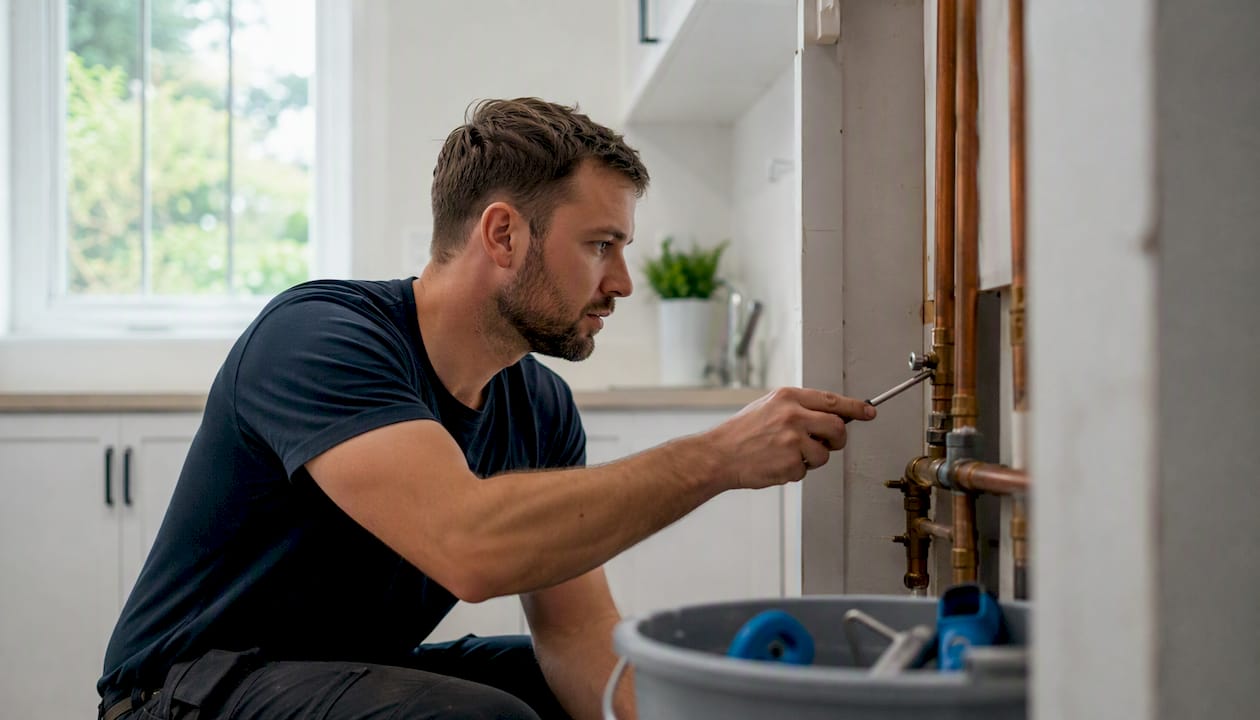
Most household pipe noise comes from one of a handful of identifiable causes: water hammer, trapped air, thermal expansion, loose pipe supports, or high incoming pressure. You can often diagnose the problem yourself with a few safe tests before touching a single fitting.
Three immediate checks to do right now:
- Shut off the appliance you suspect (washing machine, dishwasher) and listen. If the banging stops, you’ve already found your culprit.
- Note the timing. A bang when water shuts off points to water hammer. A gurgle after flushing points to a blocked vent or drain. A tick when the heating comes on is almost always thermal expansion.
- Run the shut-off test. Turn off the main stopcock, open a few taps to drain pressure, and listen. If the noise disappears, the problem is in your supply piping. If it persists, look at your heating system, appliances, or drains instead.
None of these checks require tools or risk making things worse. Start here before attempting any fix.
Key Takeaways
Noisy water pipes almost always trace back to one of five causes, and the shut-off test tells you within two minutes whether the problem is in your supply piping or somewhere else.
| Point | Details |
|---|---|
| Run the shut-off test first | Turn off the main stopcock; if noise stops, the supply pipes are the source. |
| Water hammer needs an arrestor | Fit one at the appliance inlet valve — solenoid valves in washers and dishwashers are the leading trigger. |
| Check pressure before buying parts | Sustained pressure above 80 PSI (5.5 bar) requires PRV adjustment or replacement, not just an arrestor. |
| Repeated banging causes real damage | Hydraulic shock fatigues joints and fittings over time, leading to leaks if left untreated. |
| Jmplumbingservicesltd covers Cardiff and the Vale | Local diagnostic visits, PRV and arrestor installs, and full bathroom renovation across the region. |
Table of Contents
- What tools and parts do you need before starting?
- What do different noisy water pipe sounds actually mean?
- How to fix noisy pipes: step-by-step for each cause
- How to diagnose the source of pipe noise step by step
- How to keep pipes quiet long-term
- When should you call a plumber instead of DIYing?
- A local plumber’s perspective on what actually causes pipe noise
- Persistent pipe noise? Jmplumbingservicesltd handles it locally
- Sources
What tools and parts do you need before starting?
Getting the right kit together before you start saves a wasted trip to the hardware shop mid-job.
Tools:
- Adjustable wrench and screwdrivers (flat and Phillips)
- Pipe straps or clips (plastic or rubber-lined metal)
- Foam pipe insulation sleeves
- Water pressure gauge (fits a standard outdoor tap or washing machine inlet)
- Bucket and old towels
Parts you may need to buy:
- Water hammer arrestor (sized to match your pipe diameter, typically 15mm or 22mm in UK homes)
- Replacement washers and O-rings
- Isolating valves (for appliance inlets)
Safety prep:
- Know where your main stopcock is before you start.
- If the noise is near your hot water cylinder or boiler, isolate the electrical supply before touching anything.
- Wear gloves when working near hot pipes.
Difficulty at a glance:
- Quick (30 minutes, no plumbing experience needed): Cleaning an aerator, adding foam insulation sleeves, tightening a loose pipe clip.
- Moderate (confident DIYer): Draining the system to purge air, fitting a hammer arrestor at an appliance shutoff, adjusting a pressure-reducing valve (PRV).
- Pro-level: Replacing a PRV, accessing pipes inside walls, camera-inspecting drains for gurgling.
What do different noisy water pipe sounds actually mean?
Matching the sound you hear to a likely cause is the fastest way to pick the right fix.
| Sound | When it happens | Most likely cause | Urgency |
|---|---|---|---|
| Loud bang or thud | When appliance or tap shuts off | Water hammer (hydraulic shock) | High — can damage joints over time |
| Humming or vibrating | Continuously when water runs | High pressure or loose pipe resonating | Medium |
| Whistling or squealing | At one fixture | Clogged aerator or worn washer | Low |
| Whistling (whole house) | Whenever water runs | Scale in distribution piping or PRV fault | Medium |
| Gurgling | After flushing or draining | Blocked drain or blocked vent pipe | Medium-high if with odors |
| Ticking or popping | When hot water starts | Thermal expansion in copper pipes | Low |
| Rattling | When water runs | Loose pipe clip or unsupported run | Low |
Water hammer is the most damaging noise on this list. The sharp pressure wave created when a fast-closing valve stops flow abruptly sends a shockwave through the pipework. Repeated water hammer places fatigue stress on joints and fittings that can lead to leaks over time. It is not a noise you should ignore and wait out.
Gurgling pipes in the bathroom are a different problem entirely. Gurgling drains typically indicate a blocked drain or a blocked vent pipe; when the vent is blocked, air escapes through the water in your trap instead, creating that distinctive bubble-and-glug sound. Paired with slow draining or a bad smell, it warrants prompt attention.
Thermal expansion ticking is the least urgent. Copper expands slightly as hot water runs through it, and where a pipe passes through a tight wall penetration or rests against a joist, it ticks as it moves. Annoying, but not a structural risk.
How to fix noisy pipes: step-by-step for each cause
Water hammer
Water hammer is most often triggered by the fast-closing solenoid valves in washing machines and dishwashers. Installing a water hammer arrestor near the appliance shut-off valve is the standard fix and the most reliable one.
- Shut off the water supply to the appliance.
- Disconnect the inlet hose.
- Screw the arrestor onto the inlet valve (most are 3/4-inch BSP thread in UK fittings — check before buying).
- Reconnect the hose and restore supply.
- Run a wash cycle and listen.
If the banging comes from a tap rather than an appliance, the cause is often a worn washer. A dripping tap and a banging tap share the same root: a valve that no longer closes cleanly. Replacing the washer or cartridge usually fixes both.
Air chambers are capped vertical pipe stubs that used to be the standard solution. The problem is that water gradually fills them, and once waterlogged they stop working. Modern water hammer arrestors with a sealed piston chamber are more reliable because water can never enter the gas side.
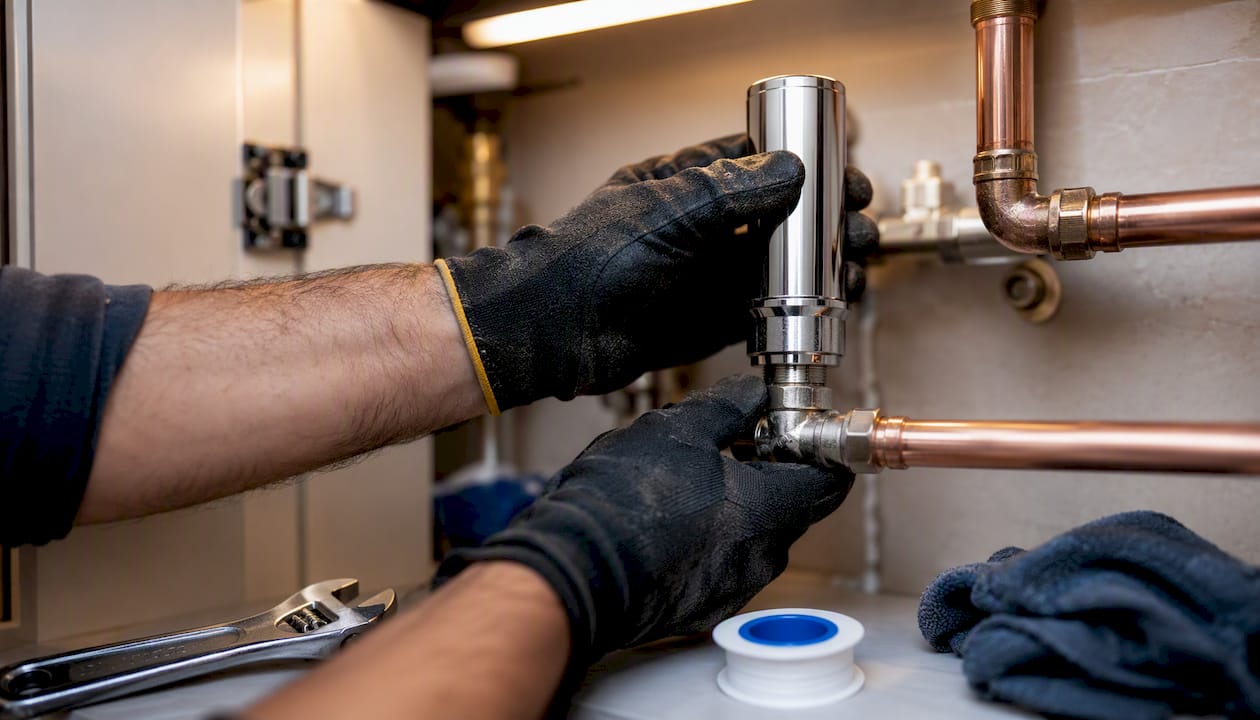
Safety note: If fixing water hammer requires soldering new fittings or accessing pipes inside a wall, stop and call a plumber. The risk of a poorly soldered joint failing later far outweighs the cost of a callout.
High water pressure
Normal residential pressure runs 40–60 PSI; sustained pressure above 80 PSI raises noise levels and accelerates wear on every valve and fitting in the house. UK mains pressure varies significantly by area, and some properties receive supply well above that threshold.
- Attach a pressure gauge to an outdoor tap or the washing machine inlet.
- Read the static pressure with no water running.
- If it reads above 80 PSI (roughly 5.5 bar), your PRV either needs adjustment or replacement.
Adjusting a PRV is a moderate DIY task: locate the valve (usually near the stopcock), loosen the locknut, and turn the adjustment screw clockwise to reduce pressure. Check the gauge again after each small adjustment. If the PRV is corroded, seized, or absent, replacement is a job for a qualified plumber. For related low shower pressure issues, a PRV set too low can be equally problematic.
Trapped air and waterlogged air chambers
Air in the supply pipes creates a knocking or juddering sound, especially after work on the system or a mains interruption.
- Turn off the main stopcock.
- Starting at the top floor, open every cold tap fully.
- Flush all toilets.
- Work downward, opening taps on each floor.
- Wait five minutes, then slowly reopen the stopcock.
- Close taps from the bottom up as water flows steadily.
This drain-down procedure can purge trapped air and sometimes restore waterlogged air chambers without opening any walls. If banging returns within a few days, the air chamber has failed and an arrestor is the better long-term answer.
Loose pipe supports and rattling
Pipes that aren’t clipped at regular intervals vibrate against joists, walls, or each other when water flows. On visible runs (under sinks, in airing cupboards), this is a quick fix.
- Add a rubber-lined pipe clip every 600mm on horizontal copper runs (every 1.2m on vertical runs).
- Slide a foam insulation sleeve over the pipe where it contacts a hard surface.
- Check that existing clips haven’t corroded or cracked — a clip that looks intact but has lost its grip is worse than none.
For pipes hidden inside walls or under floors, pipe noise insulation is harder to apply without access. A plumber can sometimes inject acoustic foam around a run without full demolition, but it depends on the construction.
Whistling and squealing at a single fixture
A high-pitched squeal localized to one tap or showerhead is almost always a clogged aerator or a worn internal washer. Removing and cleaning a clogged faucet aerator often cures whistling that is localized to a single fixture; widespread whistling throughout the house suggests scale in the distribution piping instead.
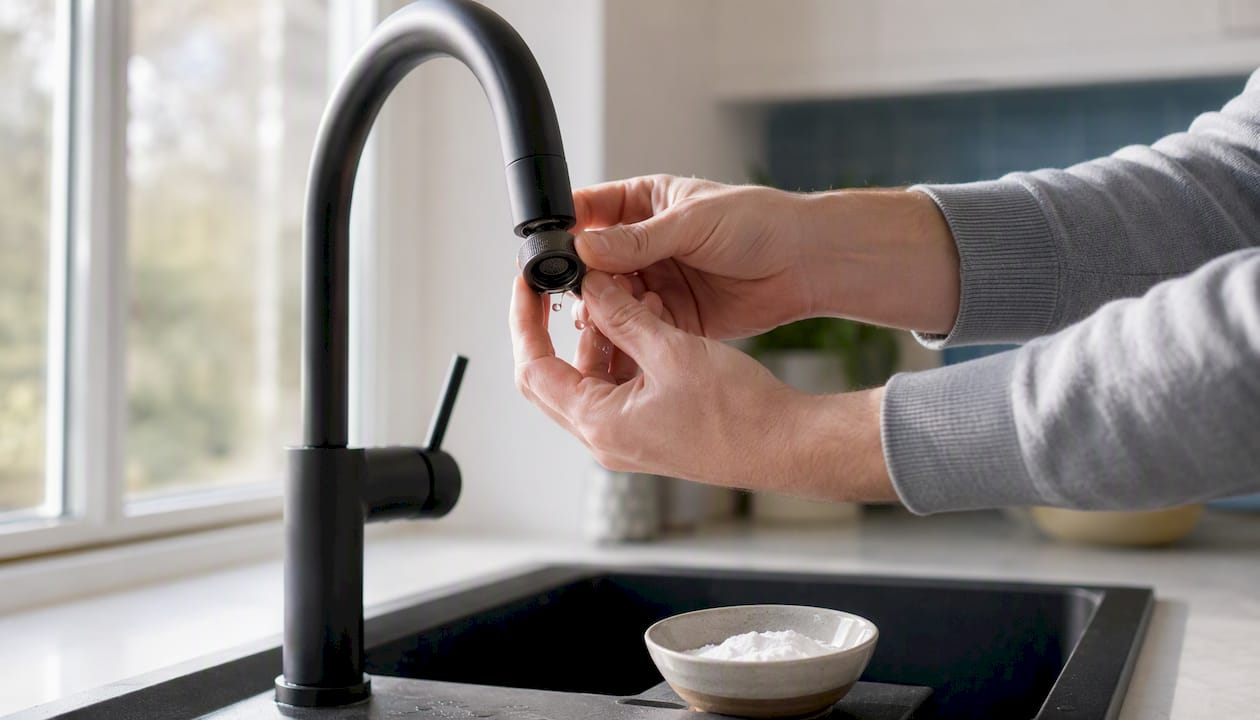
To clean an aerator: unscrew it from the tap spout, soak in white vinegar for 30 minutes, rinse, and refit. If the squeal continues, the washer or cartridge inside the tap body needs replacing.
If whistling occurs only during a specific tank fill (like a cold water storage tank), adjusting the float valve or replacing the fill valve usually stops it immediately. This is an installation or valve-design issue, not a pipe problem.
Thermal expansion ticking
Copper pipes expand when hot water runs through them. Where a pipe passes through a tight hole in a joist or wall plate, the movement creates a tick or creak.
- Wrap the pipe at the wall penetration with a short section of foam sleeve to give it clearance.
- If the pipe rests directly on a joist, fit a rubber-lined clip or slide a piece of foam between pipe and timber.
No water needs to be shut off for this fix. It takes ten minutes and a short length of pipe lagging.
Pro Tip: Before buying any parts, photograph the noise location and the nearest pipe run. A plumber or hardware shop assistant can confirm the right arrestor thread size or clip diameter from a photo, saving you a return trip.
How to diagnose the source of pipe noise step by step
Systematic testing before you start fixing saves time and avoids replacing parts that weren’t the problem.
The shut-off test
The shut-off test is the single most effective way to determine whether a noise comes from the water supply piping. If the noise persists with the main supply off, look at your heating system, appliances, or drains rather than the supply pipes.
- Turn off the main stopcock.
- Open taps on the top and bottom floors to release pressure.
- Reproduce the conditions that normally trigger the noise (run the dishwasher on battery power, or simply wait).
- If the noise stops: supply piping is the source.
- If the noise continues: check the boiler, heating circuit, or drains.
Isolate individual appliances
- Close the isolation valve on the washing machine inlet.
- Run a full wash cycle.
- If the banging stops, the machine’s solenoid valve is triggering water hammer. An arrestor fitted to that inlet is the fix. For persistent issues, a washing machine repair specialist can confirm whether the valve itself is faulty.
- Repeat for the dishwasher. Dishwasher solenoid valves close just as fast and trigger the same problem.
Check water pressure
- Screw a pressure gauge onto an outdoor tap or the washing machine inlet valve.
- Read with no water running elsewhere in the house.
- Target range: 1–3 bar (roughly 15–45 PSI) at the tap, with mains supply typically 1–5 bar in UK homes. If your gauge reads above 5.5 bar (80 PSI) at the mains, a PRV adjustment is needed.
Fixture-level checks
- Remove aerators from any tap that whistles and check for scale or debris.
- Open the isolation valves under sinks slowly and fully. A partially open valve creates turbulence and noise.
- Check the toilet fill valve — a worn or misadjusted fill valve is a common source of hissing and water hammer after flushing.
Pro Tip: Keep a simple log: note the time, which appliance was running, what the noise sounded like, and whether the shut-off test stopped it. A one-page record like this cuts a plumber’s diagnostic time significantly and may reduce your callout cost.
How to keep pipes quiet long-term
A few routine checks prevent most pipe noise from returning.
- Annually: Test mains pressure with a gauge. Inspect visible pipe clips for corrosion or loosening. Clean aerators on all taps and showerheads.
- After any new appliance install: Fit a water hammer arrestor at the inlet valve before the first use. Solenoid-valve appliances are the leading trigger of water hammer in UK homes.
- At wall penetrations: Check that foam sleeves are intact. They compress and harden over years and lose their noise-isolating effect.
- In winter: Thermal expansion noise is worse when pipes run cold for long periods and then heat up sharply. Keeping background heating on a low setting reduces the temperature swing and the associated ticking.
- After any plumbing work: Run the drain-down procedure to purge air introduced during the repair. Air in the system after a repair is the most common cause of new banging that wasn’t there before.
High incoming pressure and failed air chambers are the two most common underlying causes of recurring water hammer. Fixing the symptom without addressing either of those means the noise will return.
When should you call a plumber instead of DIYing?
Some pipe noise problems are genuinely beyond safe DIY territory. Here’s when to stop and pick up the phone.
Call a plumber if:
- Loud banging is frequent and has been going on for weeks or months. Repeated hydraulic shock shortens the life of joints and fittings, and the damage accumulates silently until a fitting fails.
- Pressure reads above 5.5 bar (80 PSI) and you cannot locate or adjust the PRV.
- The noise started immediately after a plumber, builder, or utility company did work on your system.
- Gurgling is paired with slow drains and a bad smell. A slow draining bath combined with gurgling elsewhere in the house points to a shared blockage or a failed vent stack — neither is a DIY fix.
- You can see pipe movement, wet patches, or staining near the noisy section. If chasing a noise risks causing a bathroom leak, the repair cost of getting it wrong far exceeds a plumber’s callout fee.
- The noisy pipes are inside a wall, under a concrete floor, or otherwise inaccessible without structural work.
What a plumber will do on a visit:
- Measure incoming mains pressure with a calibrated gauge and log it over a short period.
- Inspect, adjust, or replace the PRV.
- Install water hammer arrestors at the correct locations (appliance inlets, branch points).
- Secure hidden pipe runs using access panels or, where necessary, limited opening of walls.
- Camera-inspect drains if gurgling with odors persists after basic checks.
Before the plumber arrives: Have your noise log ready (when it happens, what it sounds like, shut-off test result). Know where your main stopcock and appliance isolation valves are. This preparation alone can cut the diagnostic portion of a visit short.
A local plumber’s perspective on what actually causes pipe noise
The most common call-out for pipe noise in Cardiff and the Vale of Glamorgan follows the same pattern: a washing machine or dishwasher installed without a hammer arrestor, in a house where the mains pressure is running higher than the homeowner realizes. The bang is dramatic enough to feel alarming, but the fix is usually a £15–£20 arrestor fitted in under an hour.
What gets missed more often is the pressure side of the equation. Homeowners focus on the bang and buy an arrestor, but if the incoming pressure is sitting at 6 bar, the arrestor is working harder than it should and will wear out faster. Measuring pressure first, then fitting the arrestor, is the right order.
Older copper runs in Cardiff’s Victorian and Edwardian terraces often have inadequate clip spacing because the original installation predates modern guidance. Those pipes rattle and hum in ways that newer plastic runs with noise-isolating supports simply don’t. Plastic piping, when installed with proper noise-isolating clips, transmits noticeably less noise than rigidly clamped copper — a real consideration if you’re re-piping during a renovation.
The diagnostic step most homeowners skip is the shut-off test. It takes two minutes and immediately tells you whether the noise is a supply-pipe problem or something else entirely. Run it before you buy anything.
Persistent pipe noise? Jmplumbingservicesltd handles it locally
When the shut-off test points to a supply-pipe problem and the DIY fixes haven’t held, the faster path is a professional diagnostic visit rather than another round of parts and guesswork.
Jmplumbingservicesltd covers Cardiff and the Vale of Glamorgan for exactly this kind of work: mains pressure measurement, PRV inspection and replacement, water hammer arrestor installation, and securing pipe runs that rattle inside walls. For homeowners whose noisy plumbing turns out to be part of a bigger picture, the team also handles full bathroom renovation in Cardiff and installations across the region, including Penarth, Cowbridge, and Barry.
Booking is straightforward. Bring your noise log to the call, note which appliances trigger the sound, and mention whether the shut-off test stopped it. That information lets the team arrive prepared rather than starting from scratch. To arrange a visit or get a quote, check the Cardiff plumbing service page or the Penarth installation page for local contact details.
Sources
The following sources informed this guide and are worth bookmarking for deeper reference:
- HowStuffWorks — Water hammer explanation
- Oatey — What causes banging pipes and how to stop it
- Hansen’s Plumbing — What that bathroom drain gurgling sound really means