
Stop Bathroom Limescale Fast: UK Homeowner Fixes and When to Call a Plumber
Step by step, surface by surface fixes for bathroom limescale in UK homes. 15–60 minute DIY soaks, simple prevention, and when to call a plumber.
Stop Bathroom Limescale Fast: UK Homeowner Fixes and When to Call a Plumber
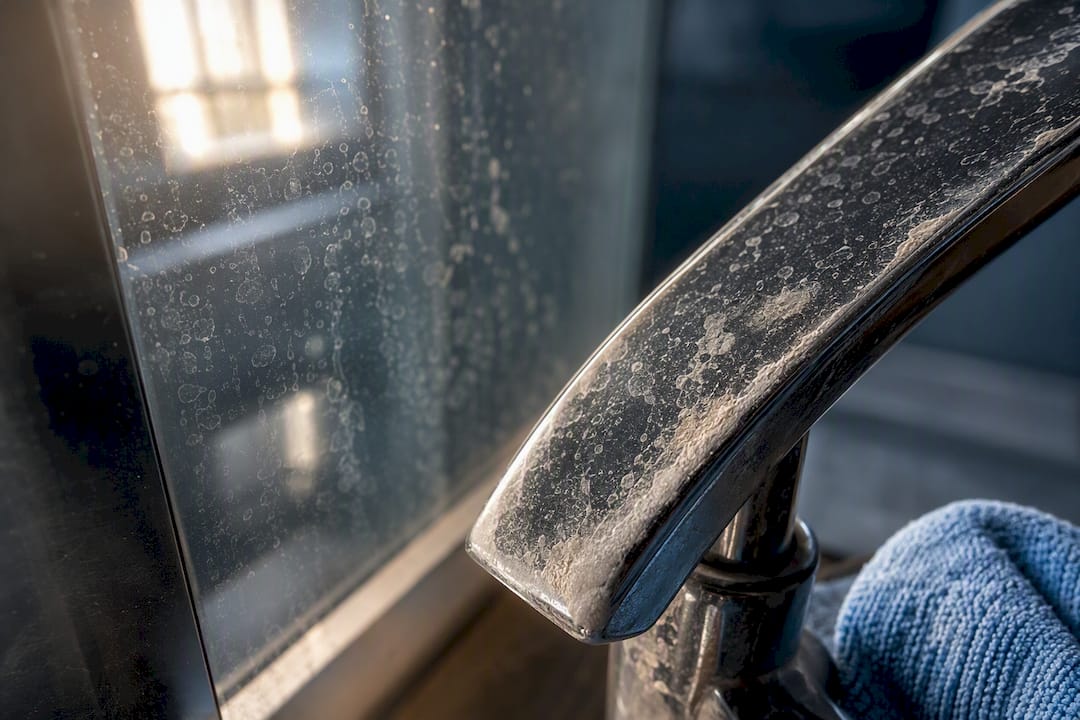
For light limescale, soak the affected spot in white vinegar or citric acid for 15 to 60 minutes, then wipe clean. Heavy deposits need a commercial descaler or a bicarbonate of soda paste for gentler surfaces. If the problem sits inside a concealed cistern, involves a persistent leak, or keeps returning after proper treatment, call a plumber rather than keep scrubbing. Dry taps and squeegee glass after every shower to slow the buildup down.
TL;DR:
- White vinegar and citric acid offer safe, effective solutions for removing limescale, but they require a soak time of at least 15 minutes for best results.
- Regularly dry and squeegee bathroom surfaces after each use, especially in hard-water areas, to prevent frequent buildup and reduce cleaning needs.
- Hidden limescale in concealed cisterns, inside tap valves, and around overflow fittings can cause leaks or silent faults and often requires professional attention.
- Avoid using bleach and abrasive scrubbing tools, especially on delicate or coated surfaces, to prevent damage and ineffective cleaning.
- Installing a water softener significantly reduces limescale formation and lowers the frequency of chemical descaling needed over time.
Table of Contents
- What Causes Limescale Buildup in UK Bathrooms?
- Where Does Limescale Build Up Most in a Bathroom?
- How Do You Remove Limescale From Taps and Chrome Fittings?
- How Do You Descale a Shower Head Properly?
- How to Clean Limescale off Glass, Tiles, and Grout
- Dealing With Toilet Limescale and Concealed Cistern Problems
- Building a Prevention Routine That Actually Works
- What Should You Never Use on Limescale?
- Is Limescale Removal Bad for the Environment?
- Are Chemical Descalers Safe to Use at Home?
- Need More Than a Descaler? How Jmplumbingservicesltd Can Help
- Sources
- FAQ
What Causes Limescale Buildup in UK Bathrooms?
Limescale is calcium carbonate left behind when hard water evaporates or heats up. The minerals that were dissolved in the water stay put once the water is gone, and they harden into that chalky white crust on taps, glass, and tile.
Heat speeds this up considerably, which is why kettles, shower heads, and hot taps scale faster than cold ones. Evaporation does the same job more slowly on flat surfaces like shower glass and bath rims, leaving ring marks and haze that build layer by layer.
Where you live in the UK changes how often you’ll deal with this. Homes across London, the South East, and much of the East of England sit on chalk and limestone geology, giving them some of the hardest water in the country. Cardiff and much of Wales sit on softer water, but even moderately hard water leaves visible scale within a few weeks if fittings aren’t dried regularly.
The fix comes down to chemistry: acids dissolve calcium carbonate by reacting with it directly, which is why household remedies lean so heavily on the same few ingredients.
- White vinegar: cheap, effective, mildly acidic, safe on most metal and glass
- Citric acid: stronger than vinegar, sold as crystals or granules, dissolves faster
- Bicarbonate of soda: not acidic, but useful as a mild abrasive paste for softer scrubbing
Vinegar and citric acid dissolve mineral deposits by reacting directly with calcium carbonate, and both work well left in contact for 15 to 60 minutes before rinsing.
Where Does Limescale Build Up Most in a Bathroom?
Some spots scale up fast and are easy to spot. Others hide until they cause a bigger problem.
Visible hotspots worth checking weekly:
- Tap spouts and the base where the tap meets the basin or bath
- Shower heads and nozzles, especially fixed overhead units
- Shower glass and screens, particularly around the bottom edge
- Bath and basin rims where water pools and dries
- Grout lines and tile edges near the shower tray
- Plugholes and overflow slots
- The waterline ring inside the toilet bowl
Hidden trouble spots matter just as much, even though you won’t see them during a normal clean. Limescale collects under silicone seals, inside tap valves and cartridges, around overflow fittings, and deep inside concealed toilet cisterns where it coats rubber washers and flush valves. These spots don’t announce themselves with a chalky crust. They announce themselves with a slow leak, a tap that won’t fully shut off, or a toilet that keeps quietly refilling.
How Do You Remove Limescale From Taps and Chrome Fittings?
Chrome and enamel finishes are durable but not indestructible, and limescale removal is where most people accidentally damage them. The mistake is reaching for a scouring pad. The fix is patience.
- Soak a cloth or paper towel in white vinegar or a citric acid solution (roughly two tablespoons of citric acid crystals per 500ml of warm water).
- Wrap the soaked cloth tightly around the base of the tap and the spout, covering every scaled area.
- Leave it in place for 30 to 60 minutes. Heavier deposits may need a second soak.
- Remove the cloth and wipe away the loosened scale with a soft, damp cloth.
- Rinse thoroughly with clean water to remove any acid residue.
- Buff dry with a microfiber cloth to bring back the shine and stop water spots forming again.
For scale that’s built up in tight grooves or around tap handles, switch to a bicarbonate of soda paste (three parts bicarbonate to one part water) applied with a soft toothbrush. It’s gentler than acid and works well for detail cleaning without any risk of pitting.
Pro Tip: Resist the urge to scrub the second the vinegar goes on. The acid needs time to break the calcium carbonate down chemically, and aggressive scrubbing with abrasive pads scratches chrome and enamel, creating tiny grooves where limescale grips even harder next time.
Skip anything gritty on brushed nickel, matt black, or gold finishes. These coatings scratch far more easily than standard chrome and often can’t be restored once marked.
How Do You Descale a Shower Head Properly?
A shower head clogged with limescale doesn’t just look bad. It cuts water pressure, sprays unevenly, and eventually stops working in some nozzles entirely.
- If the shower head is removable, unscrew it and submerge it fully in a bowl of white vinegar or a citric acid solution.
- Leave it to soak for at least one hour. Heavily scaled heads may need two to three hours, or an overnight soak.
- If it’s fixed to the wall, fill a sandwich bag with vinegar or citric acid solution, tie it around the shower head so the nozzles sit submerged, and leave it in place using an elastic band or tape.
- After soaking, use a soft toothbrush or a cocktail stick to clear any remaining scale from individual nozzle holes.
- Run the shower on hot for a minute to flush out loosened debris before use.
If vinegar alone isn’t cutting it, denture tablets or citric acid can outperform some supermarket descalers on stubborn nozzle blockages, and both are cheaper per use than most branded spray products. For chrome or stainless-steel heads with light scale rather than heavy blockage, steam cleaning with a detail nozzle lifts deposits without any risk of scratching, though it won’t clear internal nozzle blockages the way a soak does.
Pro Tip: After descaling, a very light wipe of glycerin on the shower head’s outer casing helps water bead off rather than sit and dry, which slows the next round of scaling considerably.
How to Clean Limescale off Glass, Tiles, and Grout
Shower screens and tiles respond well to a spray-and-wait approach rather than heavy scrubbing.
Mix equal parts white vinegar and warm water in a spray bottle, or dissolve citric acid crystals into warm water for a stronger solution on heavier haze. Spray generously across the glass or tile surface, leave for 10 to 15 minutes, then wipe with a non-abrasive microfiber cloth. Rinse with clean water and squeegee dry immediately. Never let the acid solution dry on the glass, as leftover residue attracts dust and minerals and speeds the next buildup along.
For grout lines, a bicarbonate paste worked in gently with a soft-bristled brush lifts limescale without breaking down the silicone or grout sealant the way stronger acids can over repeated use. If grout looks patchy or is pulling away from the tile after cleaning, it’s worth resealing rather than continuing to clean around a failing seal.
- Squeegee shower glass and tiles after every use. This single habit does more to prevent scale than any weekly deep clean.
- In hard-water areas, a quick vinegar spray once a week on glass and tile edges keeps deposits from ever setting hard.
- Avoid bleach-based sprays on grout near silicone seals, since bleach breaks down silicone over time.
Dealing With Toilet Limescale and Concealed Cistern Problems
The waterline ring inside a toilet bowl is the most common limescale complaint, and it’s also the easiest to fix yourself.
- Turn off the water supply to the cistern or hold the flush to lower the water level in the bowl below the ring.
- Apply a gel-based descaler or pour in undiluted white vinegar, coating the ring directly.
- Leave overnight for the best result on stubborn staining.
- Scrub gently with a toilet brush the next morning, then flush thoroughly.
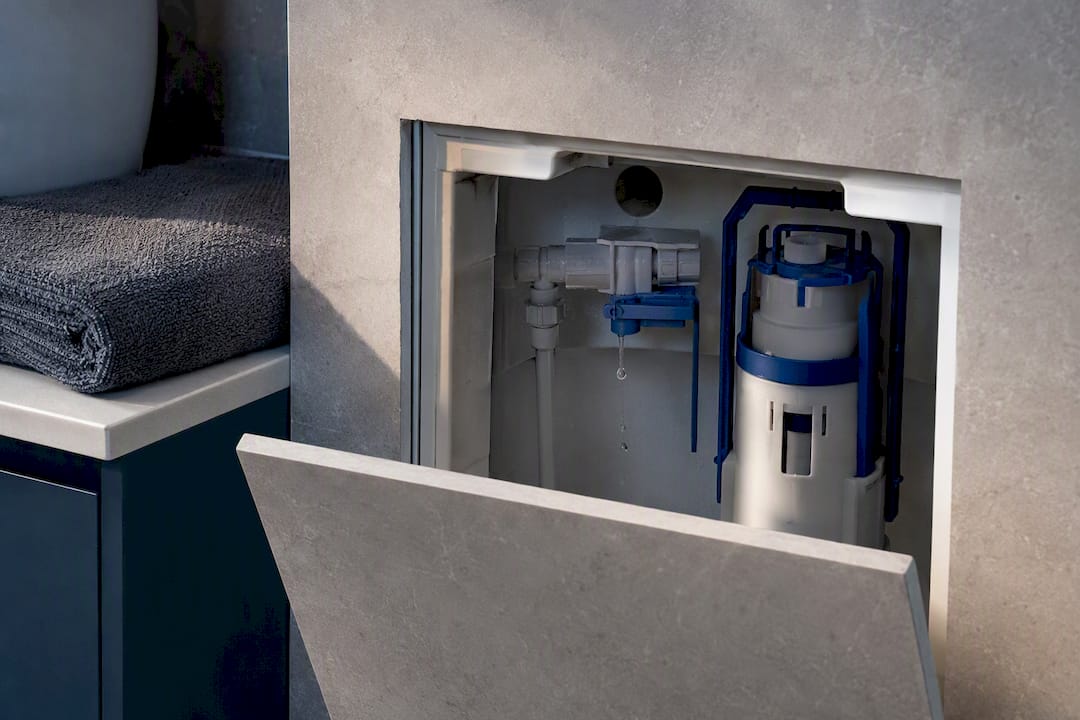
Concealed cisterns are a different story, and this is where DIY has real limits. Limescale inside a concealed cistern builds up on rubber seals and valves, which can cause the flush valve to seat incorrectly. That leads to silent leaks that waste water for weeks before anyone notices a higher bill. A faint trickling sound, a cistern that refills on its own every few minutes, or scale that returns within days of cleaning are all signs the internals need servicing rather than another bottle of descaler.
One overlooked early warning: many concealed cisterns start with nothing more than an intermittent refill cycle, easy to dismiss as normal until the seal fails completely and water starts finding its way into the wall cavity behind the panel.
Building a Prevention Routine That Actually Works
Limescale prevention isn’t complicated, but it does need to be consistent. Light, regular maintenance keeps deposits from ever hardening, which cuts down dramatically on how often you need a full acid soak.
A realistic schedule for most UK households:
- Daily: squeegee shower glass and wipe down tap surrounds after use, especially in hard-water regions
- Weekly: a quick vinegar spray on taps, shower doors, and bath rims before scale has time to set
- Monthly: soak removable shower heads and tap aerators, and check silicone seals for early staining
If descaling has become a monthly chore no matter how consistent you are, it might be time to look at a water softener. Softeners strip the calcium and magnesium out of your water supply before it ever reaches the tap, which noticeably cuts down on descaling frequency and reduces wear on appliances like showers, boilers, and washing machines.
A simple homeowner checklist:
- Inspect taps, shower heads, and grout lines weekly for early haze
- Dry surfaces after every use rather than letting water evaporate in place
- Soak removable parts monthly, even if they don’t look badly scaled yet
- Reseal grout or silicone the moment it looks patchy, not months later
What Should You Never Use on Limescale?
Bleach is the biggest mistake homeowners make here. Bleach disinfects surfaces but doesn’t dissolve mineral deposits at all, so it does nothing for limescale and can damage rubber seals with repeated use. Never mix bleach with vinegar or any acid-based descaler. The combination produces chlorine gas, which is genuinely dangerous in an enclosed bathroom.
- Avoid acid-based cleaners on natural stone, marble, or limestone tiles. Acid etches these surfaces permanently within seconds.
- Skip abrasive pads and scouring powders on matt, colored, or brushed metal finishes.
- Use a plastic scraper or soft cloth instead of anything metal on acrylic baths and shower trays.
- When using a commercial descaler, work with the bathroom window open or the extractor fan running, and always rinse the treated surface thoroughly afterward.
Is Limescale Removal Bad for the Environment?
Commercial descalers are effective, but many contain hydrochloric or phosphoric acid in concentrations far stronger than anything in your kitchen cupboard, and they carry a real environmental cost once rinsed down the drain. Wastewater treatment plants aren’t designed to neutralize large volumes of strong acid, and repeated heavy use in hard-water regions adds up across a street, let alone a city.
White vinegar and citric acid remain the more eco-friendly choice for most jobs. Both break down naturally, biodegrade quickly once diluted, and don’t carry the packaging footprint of a plastic spray bottle bought every few weeks. Buying citric acid crystals in bulk and mixing your own solution as needed cuts down on packaging waste considerably compared to disposable single-use descaler sprays.
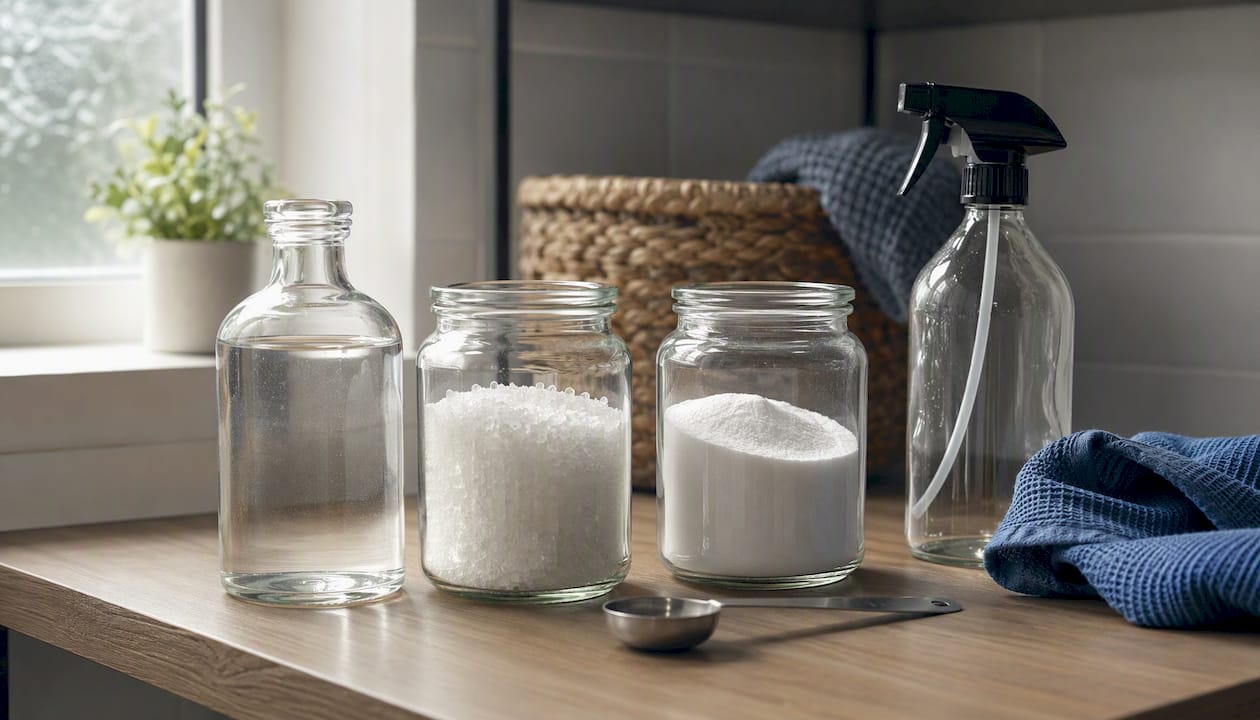
Bicarbonate of soda is arguably the gentlest option environmentally. It’s a naturally occurring mineral, non-toxic, and safe to rinse away without any concern about aquatic life or drain corrosion.
If you’re set on a commercial product, look for ones labeled biodegradable or phosphate-free. Phosphates in particular contribute to algal blooms in rivers and waterways once they pass through a treatment plant.
The bigger environmental win, though, is prevention rather than the cleaning product itself. Every squeegee wipe or dried tap is one less soak, one less bottle of descaler, and less acidic runoff overall. A water softener has an upfront environmental cost in salt or resin use, but it also means far less descaler purchased and used over a fitting’s lifetime, which for many hard-water households evens out over a few years.
Are Chemical Descalers Safe to Use at Home?
Most household descalers are safe when used as directed, but commercial products are considerably stronger than vinegar or citric acid, and that strength comes with real precautions.
Always ventilate the bathroom when using a commercial descaler. Strong acid fumes in a small, enclosed space can irritate the eyes, throat, and lungs, especially if you’re leaning in close to scrub a shower tray or toilet bowl. Open a window, run the extractor fan, and take breaks if you feel any tightness in your chest or throat.
Wear rubber gloves when handling anything stronger than diluted vinegar. Concentrated citric acid and commercial gel descalers can irritate skin with prolonged contact, particularly if you have any small cuts or sensitive skin. Eye protection is worth it too if you’re spraying rather than wiping, since splashback happens more often than people expect on vertical surfaces like shower screens.
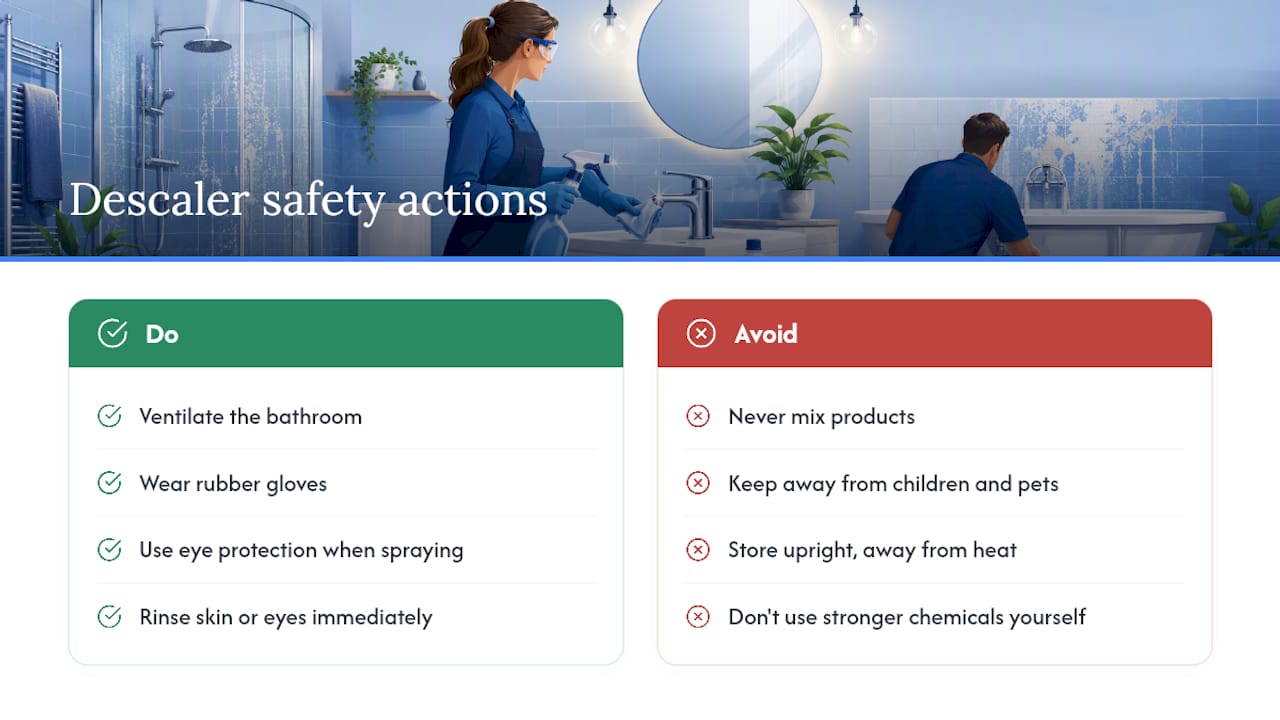
Never mix products. Combining a commercial descaler with bleach, or even mixing two different descaler brands, risks a chemical reaction that produces toxic fumes. Stick to one product per cleaning session and rinse the area thoroughly before switching to anything else.
Keep descalers out of reach of children and pets, and store them exactly as labeled, upright and away from heat. If a descaler splashes onto skin or into eyes, rinse immediately with cool water for several minutes and seek medical advice if irritation persists. For anything beyond mild household descaling, particularly work involving cistern internals or valves, the safer move is bringing in a professional rather than experimenting with stronger chemicals yourself.
A Local Plumber’s Quick Trick
One trick that saves a callout: soak stiff cistern valve parts in citric acid solution for an hour before refitting, it clears grit that causes sticking. Your checklist: inspect, dry, soak, monitor, call a plumber if it returns.
— James
Need More Than a Descaler? How Jmplumbingservicesltd Can Help
Some limescale problems go beyond what vinegar and a soft brush can fix, and that’s exactly where Jmplumbingservicesltd earns its keep for homeowners across Cardiff and the Vale of Glamorgan. Instead of guessing at a concealed cistern issue or living with a tap that never quite shuts off, you get a plumber who deals with scale damage on seals, valves, and fittings as routine work, not a mystery callout.
Jmplumbingservicesltd handles concealed cistern servicing, seal and valve replacement, and full bathroom renovation when limescale has permanently marked chrome, enamel, or acrylic finishes beyond a home fix. Before booking a visit, take a few photos of the affected area, jot down what you’ve already tried, and note how long the problem has persisted. That prep speeds up the inspection and gives you an accurate quote on the spot rather than a guess. If your bathroom’s scale problems have turned into a bigger renovation conversation, the Cardiff bathroom installation team is the place to start.
Sources
- Remove Limescale in the Bathroom | The Bathroom Showroom
- 9 ways you’re making bathroom limescale worse (and how to stop it coming back)
- Concealed cistern toilet problems and how to fix them | Checkatrade
- Cleaning the bathroom: Dirt and limescale don’t stand a chance | Kärcher
- How to remove limescale from a shower head | Homebuilding
FAQ
How Do I Get Rid of Limescale in a Toilet in the UK?
Lower the bowl’s water level, apply a gel descaler or undiluted white vinegar directly to the stained ring, leave overnight, then scrub and flush. For scale returning inside a concealed cistern, the internals likely need professional servicing rather than another descaler treatment.
What’s the Plumber’s Trick for Removing Limescale?
Soaking stiff or scaled valve parts in citric acid solution before reassembly clears grit and mineral buildup that causes sticking, a step many DIY cleans skip because the parts aren’t visible during a normal clean.
How Can I Remove Limescale From My Bathroom?
Use white vinegar or citric acid soaks on taps, shower heads, and glass for 15 to 60 minutes, then rinse and dry thoroughly. Switch to bicarbonate of soda paste for grout and delicate finishes, and call a plumber like Jmplumbingservicesltd if scale keeps returning or affects a concealed cistern.
What Removes Limescale Completely?
No single product removes every trace of limescale permanently, since hard water keeps depositing fresh minerals. A thorough acid soak followed by rinsing and drying clears existing scale effectively, while regular squeegeeing and, in hard-water areas, a water softener keep it from building back up as quickly.
Can I Use Bleach on Bathroom Limescale?
No. Bleach disinfects surfaces but doesn’t dissolve calcium carbonate, so it won’t remove limescale, and mixing it with any acid-based cleaner risks producing dangerous chlorine gas.