
Bathroom Tiling Cost: A UK Homeowner's 2026 Guide
Discover the true costs of bathroom tiling in the UK for 2026. Learn pricing details and factors influencing your renovation budget.
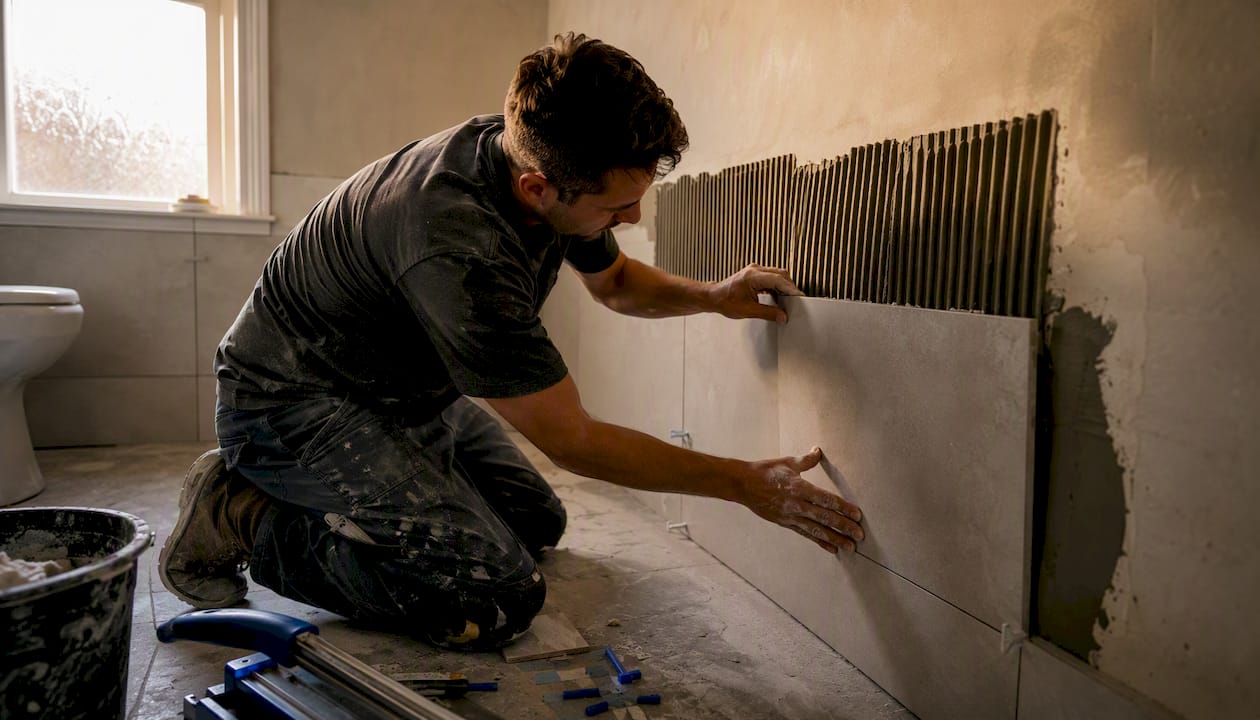
A typical UK bathroom tiling job costs somewhere between £600 and £3,000 for labour and materials combined, with most mid-sized bathrooms landing between £1,200 and £2,200. Labour alone usually runs tens of pounds per square metre, while budget ceramic tiles start from a lower cost band and premium porcelain or natural stone tiles can be considerably more expensive before installation, as explained in kitchen respraying vs new kitchen: the real cost comparison.
Those headline figures hide a lot, so here’s what they actually cover:
- Labour-only per m² means just the fitter’s time and skill, not tiles, adhesive, grout, or prep work.
- Installed per m² (sometimes called “supply and fit”) bundles tiles, adhesive, grout, and labour into one figure, but often still excludes waterproofing, substrate repair, or VAT.
- Whole-job totals for a full bathroom, roughly £800 to £3,000 in most UK cost guides, usually assume a full floor-and-wall retile with standard prep, not a wet room or a bathroom with rotten floorboards underneath.
Small subfloor repairs alone, according to real trade quotes on MyJobQuote, can run anywhere from £60 to £450 depending on access and how much of the floor needs replacing. That single line item shows how quickly a “simple retile” turns into something bigger once a tiler lifts the old tiles and finds what’s underneath. Before comparing any quotes, it helps to check that a tiler is vetted through a resource like Buy With Confidence, which gives you an independent way to confirm credentials rather than taking a quote sheet at face value.
Key Takeaways
Accurate bathroom tiling budgets depend more on confirming subfloor condition and itemized quote scope than on comparing headline per-m² prices alone.
| Point | Details |
|---|---|
| Use whole-job ranges as a guide | Budget roughly £600–£3,000 total, with mid-sized bathrooms typically falling between £1,200 and £2,200. |
| Confirm what’s included | Ask whether waterproofing, disposal, wastage allowance, and VAT sit inside or outside the quoted price. |
| Set aside contingency | Add 15–20% on top of any quote for older properties where subfloor condition is unknown. |
| Prioritize verification over price | Check Buy With Confidence registration, insurance, and written guarantees before choosing on cost alone. |
| Get a local, itemized quote | Jmplumbingservicesltd provides supply-and-fit tiling quotes across Cardiff and the Vale of Glamorgan with insurance and guarantees confirmed upfront. |
Table of Contents
- Bathroom Tiling Cost per M² vs Whole-Job Pricing
- What Affects Bathroom Tiling Cost the Most
- Tile Types and Realistic UK Price Bands
- How UK Tilers Charge for Labour
- Extras and Hidden Costs to Watch For
- How Long Bathroom Tiling Takes
- DIY vs Hiring a Professional Tiler
- How to Get and Compare Tiling Quotes
- Three Worked Bathroom Tiling Cost Scenarios
- A Local Look: How Cardiff Tiling Quotes Actually Break Down
- What Actually Matters When You’re Setting a Tiling Budget
- Get an Itemized Bathroom Tiling Quote from a Local Cardiff Installer
- Sources
Bathroom Tiling Cost per M² vs Whole-Job Pricing
Quotes get confusing fast because two tilers can describe the same job using completely different numbers. One quotes “£35 per m²” meaning labour only. Another quotes “£65 per m²” meaning tiles, adhesive, grout, and fitting all in. Neither is wrong, but they’re not comparable unless you know which is which.
| Cost category | Typical UK range (per m²) | What’s usually included |
|---|---|---|
| Labour only | £25–£50 | Fitting time and skill, cutting, laying, grouting |
| Budget tile materials | £10–£25 | Standard ceramic, basic porcelain |
| Mid-range tile materials | £25–£50 | Rectified porcelain, larger formats |
| Premium tile materials | £50–£100+ | Natural stone, large-format porcelain, mosaics |
| Installed (supply and fit) | £45–£130 | Labour plus tiles, adhesive, grout, standard prep |
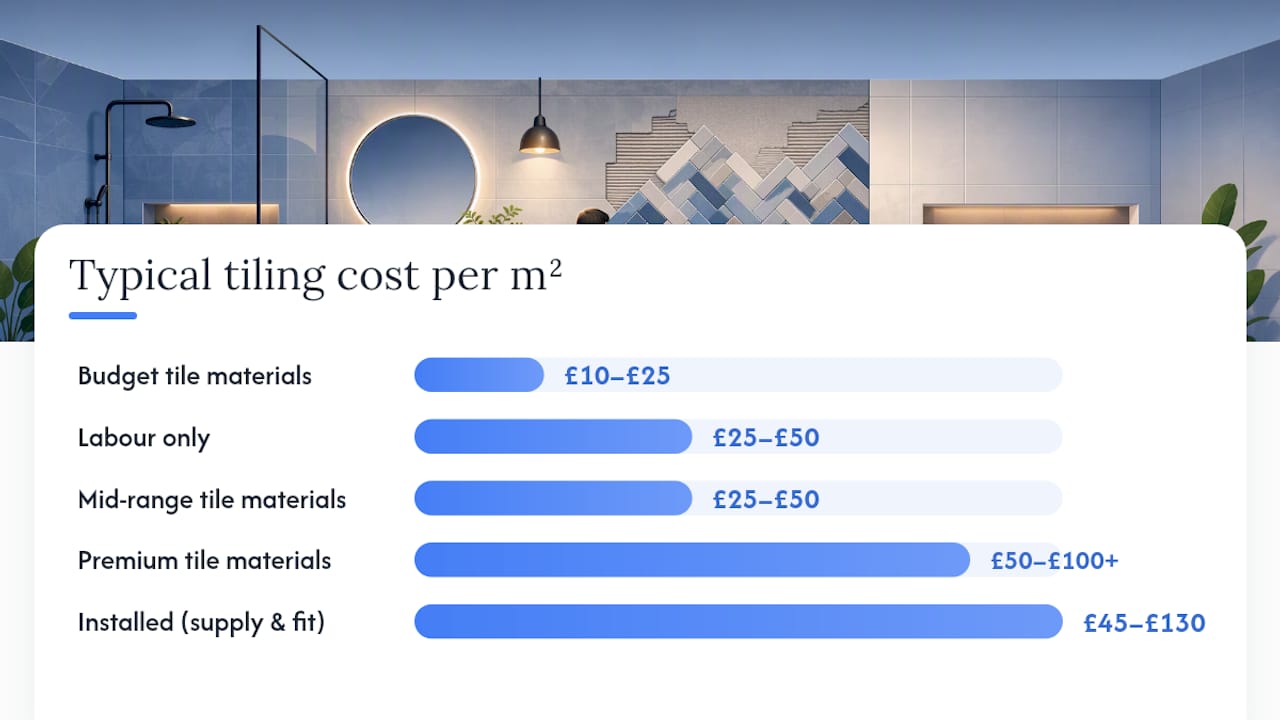
A per-m² quote almost never covers waterproofing membranes, substrate leveling, removal of old tiles, or waste disposal. Those get itemized separately, or worse, left out entirely until they show up as a surprise on the final invoice. VAT at 20% also sits outside most headline per-m² figures unless the tiler explicitly states the price is inclusive.
Use per-m² estimates for quick comparisons or small patch repairs, like retiling a single wall behind a sink. For anything approaching a full refit, ask for a whole-job quote instead. It forces the tiler to account for every variable in your specific bathroom rather than applying a generic rate that assumes a straightforward, obstruction-free room.
What Affects Bathroom Tiling Cost the Most
Room size sets the baseline, but it’s rarely the biggest swing factor. A 6m² bathroom with a rotten subfloor and a herringbone pattern request can cost more per square metre than a 12m² bathroom with a sound floor and a simple grid layout.
The factors that move the needle most:
- Tile format and material — large-format porcelain and natural stone take longer to cut and lay than standard ceramic, and they demand a flatter substrate to sit properly.
- Substrate condition — rotten floorboards, uneven screed, or old adhesive residue all add prep time before a single tile goes down.
- Waterproofing requirements — full wet rooms need tanking systems that standard bathrooms don’t, adding both material and labour cost.
- Layout complexity — diagonal, herringbone, or mixed-pattern layouts increase cutting waste and installation time significantly.
- Access and removals — a ground-floor bathroom with easy skip access costs less to strip out than a third-floor flat with a narrow staircase.
- Underfloor heating — adds both material cost and an extra installation stage before tiling can begin.
- Regional labour rates — London tilers typically charge more per day than tilers in Wales or the North of England.
One and Done Prep’s cost analysis points to room size and system type, meaning tile choice, waterproofing, and subfloor condition together, as the two strongest price drivers across most projects. Small changes in labour rate barely move the total compared to swapping ceramic for natural stone or discovering the subfloor needs replacing.
Pro Tip: Read a quote line by line looking for what’s missing, not just what’s listed. If waterproofing isn’t itemized separately, ask whether it’s included at all. If there’s no allowance for wastage on cut tiles, ask what happens if you run short mid-job, because a mid-project supplier trip usually costs more than building in 10% extra from the start.
Tile Types and Realistic UK Price Bands
Material choice probably has more influence on your final bill than any other single decision you’ll make. Here’s how the main options stack up on installed cost.
- Ceramic tiles — Budget option, typically £30 to £60 installed per m². Easy to cut, widely available, and forgiving on a slightly uneven substrate. The go-to choice for rental properties or a straightforward refresh.
- Standard porcelain — Mid-range, roughly £45 to £80 installed per m². Denser and more water-resistant than ceramic, better suited to shower floors and high-moisture zones.
- Large-format porcelain (rectified edges) — £60 to £120 installed per m². Fewer grout lines make cleaning easier, but the tiles need a genuinely flat substrate and specialist adhesive, which adds prep cost.
- Natural stone (travertine, marble, slate) — Premium, often £80 to £150+ installed per m². Requires sealing before and periodically after installation, and it’s heavier and more brittle to cut, which slows the job down.
- Mosaic tiles — £70 to £130 installed per m², driven almost entirely by labour. The small format means far more grout lines and cutting time per square metre than any other tile type.
- LVT (luxury vinyl tile) — Not true tile, but a genuine budget alternative at £25 to £50 installed per m², with faster installation and no grout maintenance.
A few practical notes worth knowing before you fall in love with a showroom sample:
- Rectified edges (perfectly squared tiles) create tighter grout lines and a cleaner look, but they cost more per tile and demand more precise cutting.
- Natural stone needs sealing before grouting and again periodically over its lifespan, an ongoing cost most homeowners forget to budget for.
- Larger tiles mean fewer grout lines but higher wastage on cuts around toilets, basins, and pipework, so a 12x24 inch porcelain tile in an awkward-shaped bathroom can generate more offcuts than you’d expect.
If you’re weighing tile against an alternative flooring surface entirely, it’s worth comparing bathroom flooring options before committing, since LVT sometimes delivers a similar look at a lower installed cost with much faster turnaround.
How UK Tilers Charge for Labour
Most UK tilers use one of three pricing models, and knowing which one you’re being quoted helps you sanity-check the number.
- Per m² rate — the standard approach for straightforward floor or wall jobs. A tiler quotes £30 to £45 per m² labour-only, and you multiply by your room’s tiled area.
- Day rate — used for complex jobs like wet rooms, intricate patterns, or jobs requiring significant substrate repair. UK day rates for an experienced tiler typically fall between £180 and £280 per day.
- Minimum call-out fee — applied to very small jobs, like retiling a single splashback, where the per-m² math wouldn’t cover the tiler’s travel and setup time. Expect £100 to £200 as a floor price regardless of how small the actual tiled area is.
Productivity assumptions matter here too. A skilled tiler working with standard ceramic on a prepped, level floor can typically lay 6 to 10 m² per day. Large-format porcelain or intricate mosaic work slows that down to 3 to 5 m² per day, because more time goes into cutting, leveling, and checking each tile before it sets.
Here’s a worked example: say you’re tiling an 8m² bathroom floor and walls, roughly 20m² of total tiled surface once you count the walls. At a £35 per m² labour rate, that’s £700 in labour. If the tiler works at 7m² per day, the job takes just under three days, which lines up with a day-rate quote of around £600 to £750 for the same work. When the two pricing models land in the same ballpark, that’s a good sign the quote is realistic rather than padded or lowballed.
Extras and Hidden Costs to Watch For
The number that appears at the top of a quote sheet is rarely the number you actually pay. Extras creep in from every direction, and the honest tilers itemize them upfront rather than adding them as surprises later.
Common line items that sit outside the headline price:
- Removal and disposal of old tiles, often £5 to £15 per m² on top of the retile cost.
- Subfloor repair or screeding to level an uneven base before tiling begins.
- Waterproofing membrane or tanking system, essential for wet rooms and shower areas, typically £150 to £400 for a standard bathroom.
- Waste disposal fees for skip hire or trade waste removal.
- Supply-only vs supply-and-fit tile pricing, where buying your own tiles can save money but shifts wastage risk onto you.
- Trims, edge profiles, and movement joints around the perimeter of tiled areas.
- Silicone sealant around baths, showers, and internal corners.
- VAT at the standard 20% rate, which applies to most residential tiling work unless a reduced rate applies under specific renovation schemes.
Before signing anything, run through this checklist:
- Are all costs itemized separately, or is it one lump figure?
- Does the quote include a written guarantee on workmanship?
- Is there an allowance for tile wastage, typically 10% for standard layouts?
- What’s the payment schedule, and does it match the work stages?
- Is public liability insurance confirmed in writing?
Pattern choice also affects the bottom line more than most homeowners expect. A straight grid layout wastes the least material and takes the least time. Diagonal layouts increase wastage to 15% or more because every edge tile needs an angled cut. Herringbone patterns can push labour time up by 20 to 30% compared to a standard grid, since each tile is individually positioned at an angle rather than laid in a repeating straight line.
Pro Tip: If you’re tempted to change the layout mid-job, ask for the cost impact in writing before the tiler starts cutting. A mid-project pattern change almost always costs more than deciding on day one, because it means reordering material and redoing prep work already completed.
How Long Bathroom Tiling Takes
Tiling isn’t a one-day job, even on a small bathroom, because grout and adhesive need proper curing time between stages. Rushing the schedule is one of the most common causes of tiles cracking or grout failing within the first year.
Typical timelines by scenario:
- Small patch repair (a few tiles or a splashback): half a day to one day.
- Full floor only, standard bathroom: one to two days for a skilled tiler.
- Floor and walls combined: three to five days, including drying time between stages.
- Full wet room with tanking: five to eight days, since the waterproofing membrane needs to cure fully before tiling begins.
The typical sequence runs: strip out old tiles and fixtures, repair or level the substrate, install backer board or waterproofing membrane, fix the tiles, grout, then seal. Each stage needs time to set before the next begins. Adhesive typically needs 24 hours to cure before grouting, and waterproofing membranes often need 24 to 48 hours before tile fixing can start on top of them.
Delays usually come from three sources: a substrate that takes longer to dry than expected, tile deliveries arriving late, or discovering mid-job that plumbing needs moving before tiling can continue. Building in a few extra days of buffer, rather than assuming a tight best-case schedule, saves a lot of frustration once the job is underway.
DIY vs Hiring a Professional Tiler
DIY tiling can genuinely save money on labour, sometimes 40 to 60% of the total job cost, but the savings come with real risk attached, especially in a bathroom where water damage from a poor job can cost far more to fix than the original tiling would have cost.
Where DIY makes sense:
- Small, low-risk areas like a splashback or a single accent wall with no waterproofing requirement.
- Simple grid layouts using standard-size tiles on an already-flat substrate.
- Homeowners with prior tiling experience and the patience to level a substrate properly first.
Where hiring a professional matters more:
- Any wet room or shower enclosure requiring a certified waterproofing system, since a failed membrane can lead to leaks into the floor below.
- Complex layouts like herringbone or large-format tiles that punish small measurement errors.
- Jobs involving moving plumbing fixtures, which usually require a qualified plumber alongside the tiler.
The risks of a DIY job going wrong are worth taking seriously. Poor waterproofing leads to leaks that can rot subfloors and damage ceilings below. Incorrect adhesive coverage causes tiles to crack or come loose within months. And a self-installed bathroom typically comes with no workmanship guarantee and no public liability insurance covering damage if something fails later. A wet room installation in particular relies on correctly certified waterproofing, not something to learn on the fly.
Pro Tip: If you do attempt any bathroom tiling yourself, never skip waterproofing in a shower or wet area to save time. It’s the one shortcut that turns a cosmetic project into a structural repair bill.
How to Get and Compare Tiling Quotes
Getting three quotes is standard advice, but the real value comes from asking the same specific questions of every tiler so the answers are actually comparable.
Questions worth asking every tiler:
- Is the price itemized by labour, materials, and extras, or is it one combined figure?
- Who supplies the tiles, and is there a wastage allowance built in?
- What waterproofing system is included, and is it certified for wet areas?
- What’s the expected start date and how many working days will the job take?
- Can you confirm public liability insurance in writing?
- Are there references or before-and-after photos from recent local jobs?
- Does the quote include a workmanship guarantee, and for how long?
Red flags that should make you pause before signing:
- A verbal quote with no written breakdown of costs.
- Reluctance to provide references or show past project photos.
- No mention of insurance when asked directly.
- Pressure to pay a large deposit in cash before any work begins.
On the trust side, look for tilers registered with Buy With Confidence, the UK’s vetted-trades resource, since it gives you an independent check beyond a company’s own marketing claims. Review platforms like Trustpilot add another layer, but treat reviews as one signal among several rather than the whole picture. A written warranty and confirmed insurance carry more weight than a five-star rating alone.
Three Worked Bathroom Tiling Cost Scenarios
Turning per-m² ranges into an actual budget is where most homeowners get stuck. Here are three realistic scenarios using standard UK pricing assumptions.
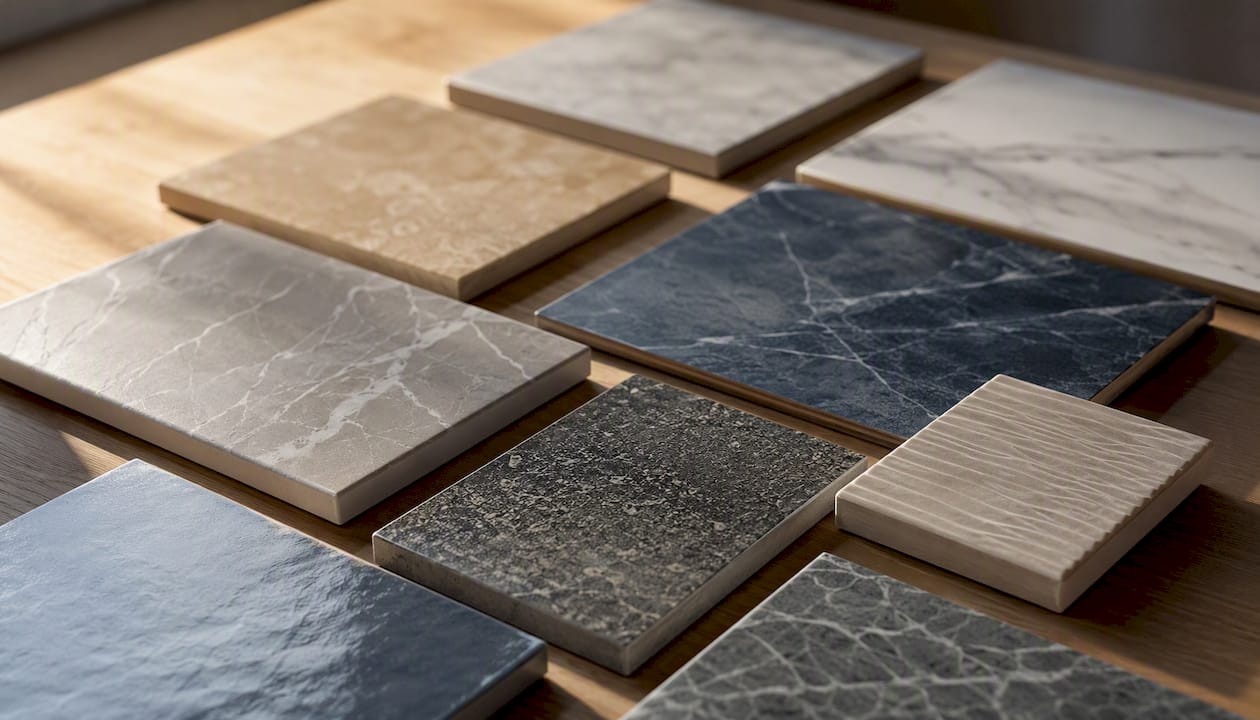
Scenario 1: Small bathroom (5m² floor, mid-range ceramic) Tile cost: 5m² × £20/m² = £100. Labour: 5m² × £35/m² = £175. Adhesive, grout, and trims: approximately £60. Waterproofing (standard, not wet room): £150. Total: roughly £495, before VAT and any subfloor repairs.
Scenario 2: Medium bathroom (10m² combined floor and walls, mid-range porcelain) Tile cost: 10m² × £40/m² = £400. Labour: 10m² × £35/m² = £350. Adhesive, grout, and trims: approximately £120. Removal of old tiles: £100. Waterproofing: £250. Total: roughly £1,260, before VAT.
Scenario 3: Large bathroom or wet room (16m² combined, premium large-format porcelain) Tile cost: 16m² × £70/m² = £1,120. Labour at a higher day rate due to large-format cutting: 16m² over 4 days at £220/day = £880. Full wet-room tanking system: £400. Removal and disposal: £180. Total: roughly £2,692, before VAT.
| Scenario | Room size | Estimated total (excl. VAT) | Main cost driver |
|---|---|---|---|
| Small | ~5m² | £400–£500 | Basic prep, ceramic tile |
| Medium | ~10m² | £1,200–£1,300 | Porcelain plus waterproofing |
| Large / wet room | ~16m² | £600–£3,000 | Large-format labour, full tanking |
These figures line up with the broader UK ranges reported by BuildX’s cost calculator and other UK-facing guides, though your actual numbers will shift based on regional labour rates and what your tiler finds once the old surface comes up. The biggest source of uncertainty in any of these scenarios is substrate condition, since a rotten floor or old adhesive residue can add hundreds of pounds that no quote can predict without seeing the room first.
A Local Look: How Cardiff Tiling Quotes Actually Break Down
National cost guides give you a starting point, but Cardiff and the Vale of Glamorgan have their own quirks that shift the numbers. A lot of the housing stock in areas like Penarth and Cowbridge is Victorian or Edwardian, meaning original floorboards and joists that often need attention before any tile can go down safely, something a newer estate house in Barry rarely requires to the same degree.
Access matters more locally than most homeowners expect. A terraced house in central Cardiff with no rear access for skip delivery adds cost simply to remove old materials, while a detached property in Rhoose with a driveway skip spot cuts that expense significantly. Labour rates across South Wales generally sit slightly below London averages, but they’re not dramatically lower than the rest of the UK, so the biggest local variable tends to be property age and subfloor condition rather than the day rate itself.
A typical supply-and-fit bathroom tiling quote from a local UK installer usually itemizes tile and adhesive supply, labour charged by day or per square metre depending on job complexity, waterproofing membrane if required, removal and disposal of old materials, and a written workmanship guarantee. Quotes are commonly supported by public liability insurance and references from recent local projects upon request.
On older properties across Cardiff and the Vale of Glamorgan, the single biggest budget swing isn’t the tile choice, it’s what’s hiding under the existing floor. A subfloor that looks fine from above can still need partial replacement once the old tiles come up, which is why an accurate quote depends on seeing the room in person rather than estimating from photos alone.
What Actually Matters When You’re Setting a Tiling Budget
Most cost guides bury the real lesson under a pile of per-m² tables: the number that changes your budget the most isn’t the tile you pick, it’s whether anyone actually checked the floor before quoting. A £40-per-m² ceramic job on a sound subfloor beats a £25-per-m² “bargain” quote that ignores a rotting joist underneath, every single time.
The conventional advice to “get three quotes and pick the middle one” misses the point entirely. Compare what’s itemized, not just the bottom line. A quote that explicitly lists waterproofing, wastage allowance, and disposal costs more upfront on paper, but it’s the one less likely to balloon once work starts. Homeowners who chase the cheapest number usually end up paying the difference anyway, just later, and usually with more disruption.
If there’s one place worth spending more than the minimum, it’s waterproofing in any wet area. It’s invisible once the tiles go on, which is exactly why cutting corners there is so tempting and so costly to fix after the fact.
Get an Itemized Bathroom Tiling Quote from a Local Cardiff Installer
Skip the guesswork of translating national averages into your own bathroom. Jmplumbingservicesltd surveys your space in person and hands you an itemized quote covering supply-and-fit tiling, waterproofing where needed, and full project management from strip-out to final seal, so the number you sign off on is the number you actually pay.
Every quote includes a site survey to check subfloor condition before any price is finalized, itemized costs broken down by materials, labour, and extras, confirmed public liability insurance, a written workmanship guarantee, and references from recent local projects across Cardiff and the Vale of Glamorgan. For homeowners weighing tiling against other flooring, the team also handles LVT and vinyl installation as part of the same service, so you get an honest comparison rather than a one-size answer.
Ready to see what your bathroom actually costs to tile? Request a quote from JM Plumbing Services and get a site visit booked in before you commit to any tile order.
Sources
- Cost to Replace Bathroom Floor: Price Guide for Common Materials 2026 – One and Done Prep
- Cost to replace creaky bathroom floorboards - MyJobQuote
When comparing any of these figures against a quote in hand, favor UK-specific resources and local reviews over generic international calculators, since labour rates, VAT treatment, and material availability all vary by market.