
Bathroom Storage Ideas That Actually Work in UK Homes
Discover practical bathroom storage ideas for UK homes. Maximize space with smart solutions like slimline units, built-ins, and stylish shelves.
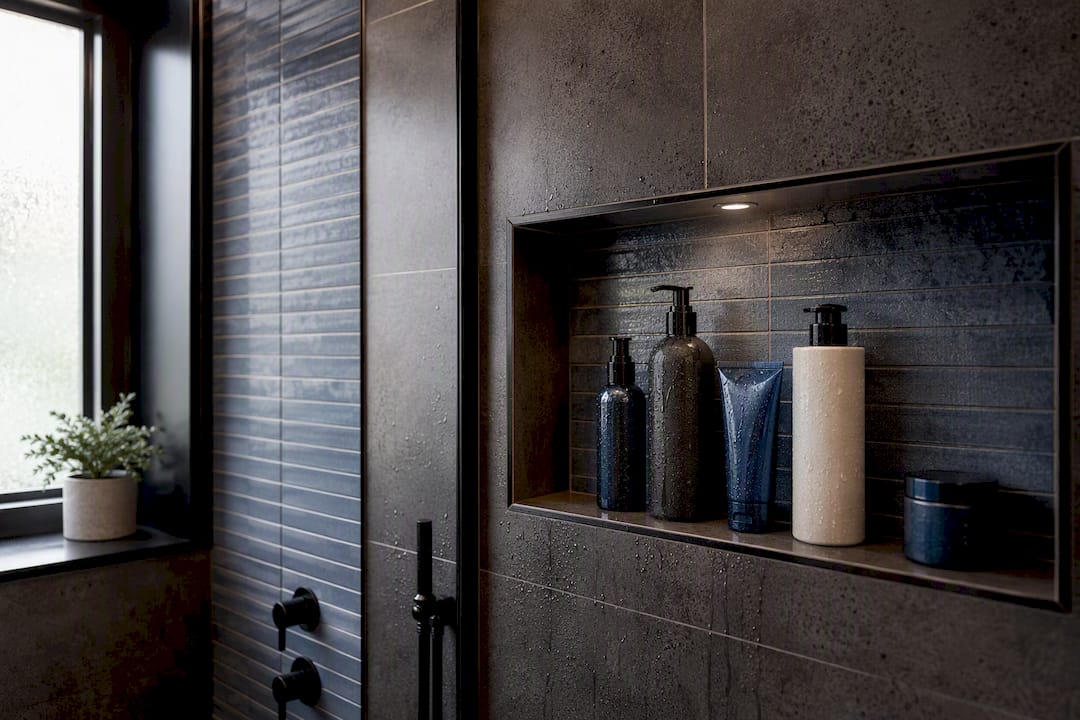
The most effective bathroom storage in the UK comes down to five categories: slimline vertical units, built-in or recessed storage, vanity pull-outs, open shelving, and low-cost baskets or hooks. For a tiny ensuite, pair a slimline unit with one floating shelf. For a family bathroom, a recessed shower niche plus full-width vanity drawers solves most clutter problems in one move.
- Slimline units: VonHaus makes a cabinet just 14.2cm wide, ideal for the gap beside a toilet or bath.
- Modular open/closed mix: IKEA ENHET combines wall-fixed cabinets and shelves you assemble yourself.
- Built-in: a recessed shower niche or medicine cabinet, cut into the stud wall during a refit.
- Vanity pull-outs: deep drawers instead of a fixed cupboard under the basin.
- Low-effort: stackable baskets, adhesive hooks, over-door racks.
Always check materials for UK humidity. Melamine-faced boards and treated MDF hold up far better than untreated chipboard, which swells and delaminates within a year or two in a steamy bathroom.
Key Takeaways
Effective bathroom storage in UK homes combines slimline freestanding units, built-in recessed features, and moisture-resistant materials matched to the room’s actual daily use.
| Point | Details |
|---|---|
| Start with slimline units | A 14.2cm-wide unit like VonHaus’s fills gaps other furniture can’t reach. |
| Prioritize concealed storage | Built-in niches and recessed cabinets reduce visual clutter more than open shelving alone. |
| Match materials to humidity | Choose melamine or treated MDF and avoid untreated chipboard in wet zones. |
| Secure anything over waist height | Wall-fix tallboys and cabinets to prevent tipping, especially with children in the home. |
| Budget in tiers | Simple fixes cost under £30; built-in work needs a proper fitter’s quote due to wall work. |
Table of Contents
- Space-saving freestanding solutions: slimline tallboys and narrow cabinets
- Built-in and recessed storage: niches, cabinets, and hidden drawers
- Under-sink and vanity organisation: pull-outs and full-width drawers
- Shelving and open storage: floating shelves, ledges, and over-toilet units
- Low-effort, renter-friendly fixes: baskets, hooks, and over-door racks
- Materials and moisture resistance: what to choose for UK bathrooms
- How to choose and measure the right storage: a quick checklist before you buy or fit
- Local installer perspective: real examples from JM Plumbing Services Ltd
- Storage solutions for different bathroom types (family, guest, master)
- Decluttering and organizing tips to maximize storage efficiency
- Safety considerations for bathroom storage (childproofing, slip resistance)
- Budget-friendly storage ideas and cost estimates
- What UK bathrooms actually need more of
- Sources
Space-saving freestanding solutions: slimline tallboys and narrow cabinets
A slimline tallboy is often the single best purchase for a cramped bathroom because it fills a gap most furniture ranges ignore. The VonHaus slimline unit measures just 14.2cm wide and carries a stated weight capacity of up to 20kg, enough for toiletries, cleaning supplies, and spare towels without bowing the shelves.
Good placement spots include the strip between basin and bath, the dead space beside a toilet, or a corner near the door for towel storage. These units work as a stopgap in rented flats too, since most sit freestanding.
- Freestanding is easy to move but can wobble on uneven tile.
- Wall-fixing turns a wobbly cabinet into a stable one, especially with kids around.
- Check that the back panel is moisture-sealed, not raw board, before you buy.
Pro Tip: If your bathroom floor slopes toward a drain (common in older Cardiff terraces), fit adjustable feet or a thin shim before wall-fixing so the unit doesn’t lean.
Built-in and recessed storage: niches, cabinets, and hidden drawers
Recessed storage wins on looks because it disappears into the wall instead of sitting on top of it. Architectural Digest notes that shower niches and recessed medicine cabinets add real capacity without shrinking the room, which is exactly why designers push concealed storage over open shelving whenever the budget allows.
A few rules keep the result looking intentional rather than bodged:
- Site niches at adult eye level, not wherever the stud gap happens to be.
- Account for finished wall thickness when measuring: tile plus backer board plus trim usually adds 18 to 25mm beyond the raw stud cavity.
- Avoid placing a niche directly opposite the door, where it’s the first thing every visitor sees.
- Waterproof the inside of the cavity and slope the base slightly so water doesn’t pool.
Converting a toe-kick or an unused stud wall into hidden storage is a genuinely cost-effective way to add volume during a refit, since it uses space that was previously dead. Recessed work costs more than a flat-pack cabinet and usually means opening the wall, so it’s worth budgeting for a professional fitter rather than treating it as a weekend DIY job.
Under-sink and vanity organisation: pull-outs and full-width drawers
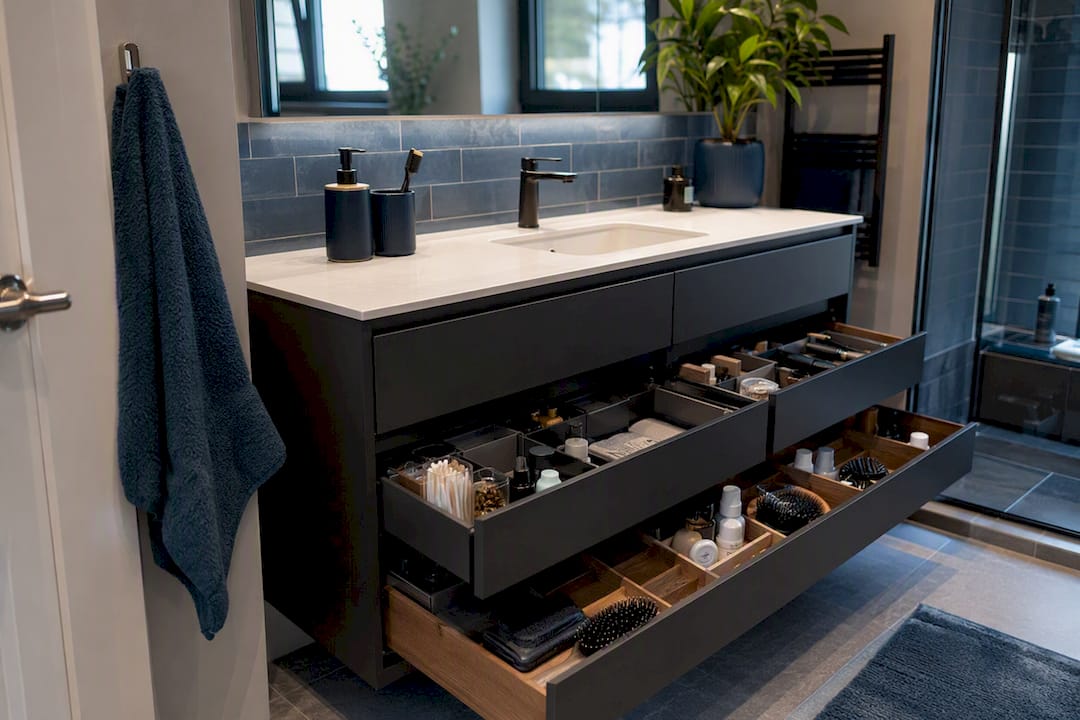
A fixed shelf under the basin wastes half its depth because you can’t see or reach what’s at the back. Full-width drawers or pull-out trays solve that instantly. You open the drawer, see everything at once, and nothing gets forgotten behind the U-bend.
- Add drawer dividers to stop bottles rolling around every time you open it.
- Use a riser or a small turntable (a lazy Susan) to make the back corners usable.
- Clear bins beat opaque ones, since you can spot low stock at a glance.
- Keep hot tools like straighteners in a heat-resistant drawer liner, away from anything flammable, and never store them plugged in near water.
If your current vanity has a single cupboard door and a wasted pedestal underneath, swapping the whole unit for a drawer-based model is usually more efficient than trying to retrofit organisers into a shape that was never designed for them.
Shelving and open storage: floating shelves, ledges, and over-toilet units
Open shelving is where a bathroom either looks curated or looks like a jumble sale, and the difference comes down to restraint. Keep two or three items on display, folded towels or a plant, and put everything else behind a door.
Alcoves either side of a chimney breast, the wall above a toilet cistern, and the strip around a mirror all work well for shelving because they use space nobody else claims. A modular system like IKEA ENHET lets you combine open shelves with closed cabinets in one wall-fixed frame, so you’re not stuck choosing one or the other.
- Glass and powder-coated metal shelves resist moisture better than raw wood.
- Sealed or laminated MDF is a safer bet than veneer for anything near the shower.
- Wipe shelves weekly. Standing water at the edge is what causes swelling, not the humidity itself.
Pro Tip: Group open-shelf items by color or container type. Three identical glass jars read as “styled.” Three mismatched bottles read as clutter, even if it’s the same amount of stuff.
Low-effort, renter-friendly fixes: baskets, hooks, and over-door racks
You don’t need to drill a single hole to fix most small-bathroom clutter. These fixes suit renters, students, or anyone who wants results this weekend.
- Stackable bins under the sink corral loose items so you’re not digging through a pile every morning.
- Adhesive hooks hold dressing gowns and hand towels; most rated brands hold 2 to 3kg, so stick to lightweight items, not wet bath towels.
- An over-door rack adds a whole extra storage plane using a door you already own.
- A tension rod fitted inside a cupboard creates an instant spray-bottle rack underneath a shelf.
- Group baskets by category (hair, skin, cleaning) rather than dumping everything into one bin. It looks deliberate, and it’s faster to find what you need.
None of this requires a landlord’s permission, and all of it comes out cleanly at the end of a tenancy.
Materials and moisture resistance: what to choose for UK bathrooms
British bathrooms run humid for longer than most European homes, thanks to smaller windows and less powerful extractor fans, so material choice matters more here than it does for a kitchen shelf. VonHaus recommends melamine-faced boards and treated MDF specifically because they resist peeling and warping where untreated timber fails.
- Melamine-faced board: wipes clean, resists swelling, budget-friendly.
- Treated or moisture-resistant MDF: solid for cabinets and shelving, holds screws well.
- Sealed plywood: the strongest option for anything near direct water contact.
- Avoid untreated chipboard entirely. It swells within months near a shower.
Check the product spec before buying: weight capacity and recommended fixings vary a lot between ranges, and a unit rated for light toiletries isn’t rated for a stack of wet towels.
How to choose and measure the right storage: a quick checklist before you buy or fit
Get the tape measure out before you get your card out. Measure the gap width where a unit will sit, note which way any door swings so it won’t collide with the new cabinet, and check clearance around the toilet cistern, usually 30 to 40cm is needed for a comfortable flush handle reach. Add a few millimeters for tile and board thickness if you’re planning anything recessed.
- Measure width, depth, and height of the target space, then subtract 5 to 10mm for a comfortable fit.
- Check door swing and drawer clearance before ordering.
- Confirm cistern or flush handle clearance if the unit sits beside a toilet.
- Ask a fitter what board and fixings they use. Waterproof-rated panels and stainless fixings are the right answer; standard plasterboard fixings in a wet zone are a red flag.
- Get a written quote before work starts, and compare simple flat-pack installs against built-in work, since built-ins involve opening the wall and cost more.
Pro Tip: If a quote seems unusually cheap for a recessed niche, ask specifically what waterproofing membrane they’re using inside the cavity. Skipping it is the most common cause of hidden damp behind a “finished” niche.
For straightforward fitting jobs, our bathroom fitters in Cardiff page covers what a typical install involves and what to expect on cost.
Local installer perspective: real examples from JM Plumbing Services Ltd
Across Cardiff and the Vale of Glamorgan, the two jobs we’re asked for most are slimline units squeezed into awkward gaps and recessed niches cut into shower walls during a refit. Older terraced properties in areas like Penarth often have narrower stud cavities than newer builds, which changes what depth of niche is actually possible.
- We use moisture-rated boards and stainless fixings as standard, not an upgrade option.
- Correctly fixed units outlast poorly fitted ones by years, particularly around showers.
- Clients consistently report that concealed storage makes a small bathroom feel noticeably calmer.
If you’re weighing a full refit against smaller upgrades, our bathroom renovation Cardiff page walks through what a typical project covers.
Storage solutions for different bathroom types (family, guest, master)
A family bathroom takes the heaviest daily traffic, so it needs the most robust storage plan. Full-width vanity drawers work better than a single cabinet because several people are grabbing items at once. A recessed shower niche sized for multiple shampoo bottles and razors cuts down on shelf clutter around the bath, and a lockable or high-mounted cabinet keeps medicines and cleaning products away from young children.
Guest bathrooms need less daily capacity but more presentation. A single well-styled open shelf with fresh towels, a small basket of spare toiletries, and a slimline cabinet tucked out of sight covers most needs without making the room feel like storage overflow from elsewhere in the house.
Master ensuites tend to have the most flexibility, since they usually serve one or two people with predictable routines. This is where a modular system like IKEA ENHET earns its keep. You can dedicate one column of cabinets to each person’s products and add open shelving for the items you actually want on display, like perfume bottles or a candle. Couples sharing a small ensuite often find that splitting storage vertically, one side each, reduces the low-level friction of shared drawers far more than adding more total space would.
Whatever the bathroom type, match the storage style to how the room actually gets used rather than copying a layout from a different household’s routine.
Decluttering and organizing tips to maximize storage efficiency
Storage only works if what goes into it earns its place first. Before buying a single new unit, empty every cabinet and drawer and sort the contents into three piles: daily use, occasional use, and expired or unused. Bathroom products have shelf lives that people routinely ignore. Mascara, sunscreen, and most skincare degrade well within a year of opening, and holding onto them just eats storage space you could use for things you actually reach for.
Once you’ve cut the dead weight, organize what remains by frequency, not by category. Daily items belong at eye level or in the top drawer. Weekly items go lower or further back. Seasonal or rarely used items, like a hot water bottle or spare razors, can live in the highest or lowest spot in a tallboy since you’re not reaching for them often.
- Do a five-minute product audit every three months rather than a full overhaul once a year.
- Store like with like: all hair products in one bin, all first aid in another.
- Use the “one in, one out” rule for anything with a shelf life, like sunscreen or cleaning sprays.
- Label drawers and bins if more than one person shares the bathroom. It cuts down on duplicate purchases.
A cluttered bathroom is rarely a storage problem alone. It’s usually a sorting problem that more cabinets won’t fix on their own.
Safety considerations for bathroom storage (childproofing, slip resistance)
Bathroom storage decisions affect safety just as much as looks, particularly in households with young children or older residents. Medicines, razors, and cleaning products should sit in a lockable cabinet or one mounted high enough that a toddler can’t reach it, never in a low drawer or an open basket at floor level.
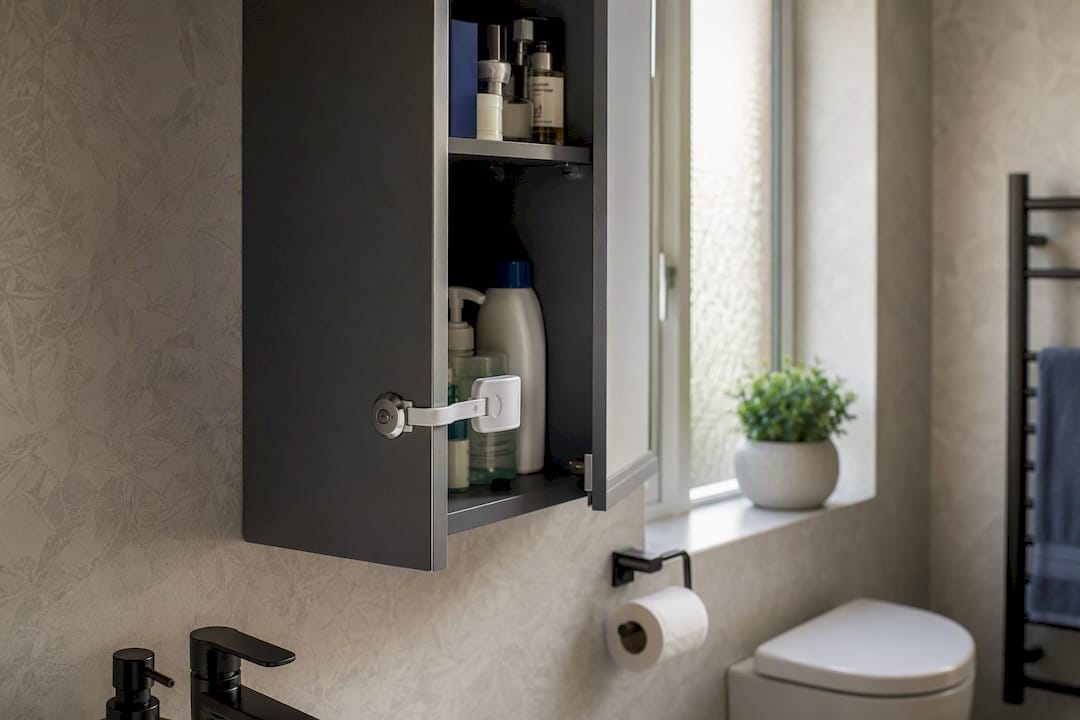
Wall-fixing matters here too, not just for stability. A freestanding tallboy that isn’t secured to the wall is a tipping hazard if a child tries to climb it or use a drawer as a step. Any cabinet over about waist height should be fixed, not just for peace of mind but because unsecured furniture is a genuine cause of injury in bathrooms.
Slip resistance deserves attention as well. Baskets and bins left on the floor near the bath or shower create a trip hazard, especially on wet tile. Keep floor-level storage to a minimum in the immediate splash zone and favor wall-mounted or raised storage instead. Over-door racks and adhesive hooks should be checked for weight limits regularly, since a rack that fails under an overloaded towel stack can cause a fall as easily as a wet floor can.
For households with mobility needs, storage height and reach matter even more. Our guide to accessible bathroom design covers layout adjustments that make storage genuinely usable rather than just present.
Budget-friendly storage ideas and cost estimates
You don’t need a full refit to fix a cluttered bathroom. The cheapest tier, adhesive hooks, stackable bins, and over-door racks, typically costs under £30 total and needs no tools beyond a cloth to clean the wall before sticking anything up.
The mid tier covers freestanding furniture. A slimline unit like the VonHaus range or a modular set from IKEA ENHET generally lands in the £40 to £150 range depending on size and finish, and most of it is DIY-assembled with basic wall fixings.
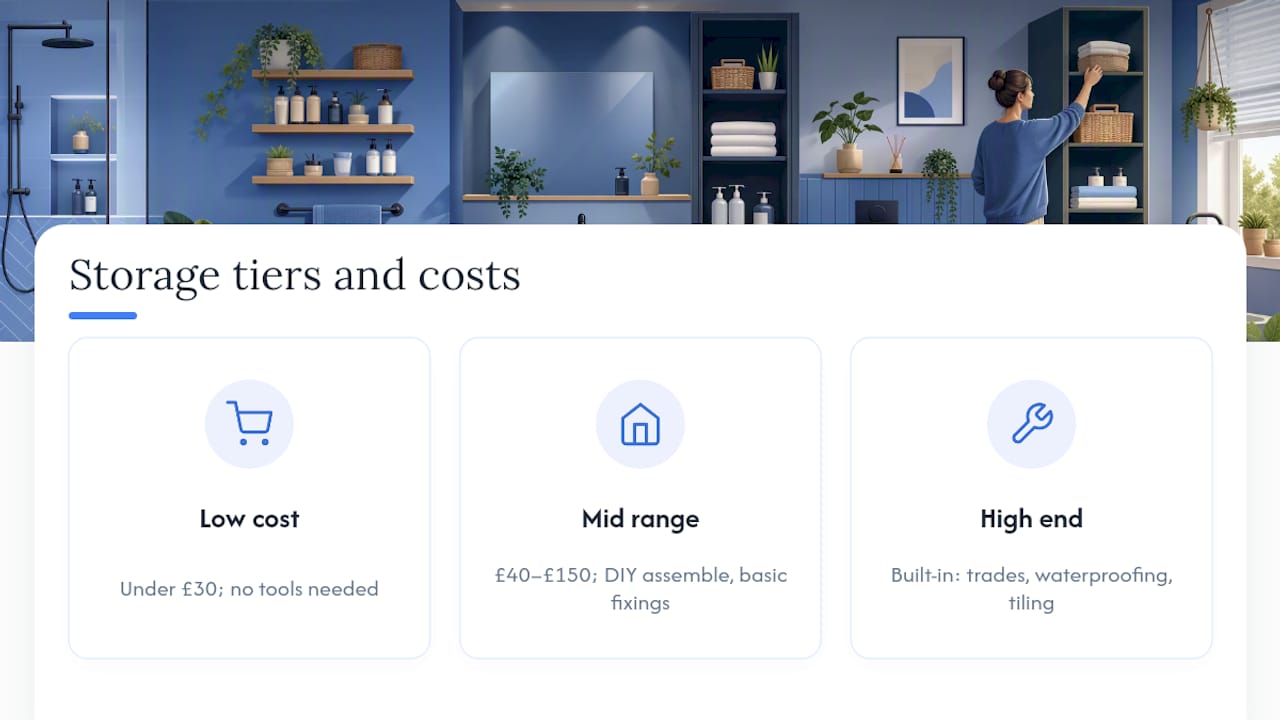
The top tier is built-in work: recessed niches, toe-kick drawers, or a full vanity swap with integrated storage. This involves opening walls, waterproofing, and often tiling repair, so it costs meaningfully more than flat-pack furniture and is best quoted directly by a fitter rather than estimated from a shelf price. If you’re planning this alongside a wider refit, our Cowbridge bathroom installation page and our Penarth page both cover project examples with realistic scope for the area.
A sensible approach for most households is to fix the easy, cheap wins first, then save built-in storage for whenever a bigger renovation is already planned, since opening a wall purely for storage rarely makes financial sense on its own.
Ready to combine smart storage with a full bathroom upgrade? JM Plumbing Services handles everything from a single recessed niche to a complete renovation across Cardiff and the Vale of Glamorgan, using moisture-rated materials and proper wall fixings throughout.
What UK bathrooms actually need more of
Most bathroom storage advice online is written for houses with generous stud cavities and forgiving budgets. That’s not most UK bathrooms, particularly the Victorian and interwar terraces common across Cardiff and the Vale, where wall thickness, pipe runs, and boxed-in soil stacks all eat into the space a niche or recessed cabinet would need.
The conventional advice oversells built-in storage as the default answer. It’s the best-looking option, and it genuinely reduces clutter, but it’s also the most disruptive and the easiest to get wrong if the waterproofing inside the cavity is rushed. A slimline freestanding unit, fitted properly to the wall, solves the same daily problem for a fraction of the cost and disruption.
If there’s one thing worth prioritizing first, it’s sorting before buying. A well-organized bathroom with modest furniture beats a badly sorted one with expensive built-ins every time. Fix the sorting problem, then decide whether the remaining clutter genuinely justifies opening a wall.
Sources
- Slimline Grey Storage Unit | Bathroom Storage | VonHaus
- ENHET bathroom range | IKEA UK
- Under the sink is a scary place—These bathroom storage tips make it less so | Architectural Digest