
Bathroom Flooring Options for Cardiff Homeowners
Explore the best bathroom flooring options for Cardiff homeowners. From porcelain tiles to budget-friendly vinyl, find the perfect fit for your space.
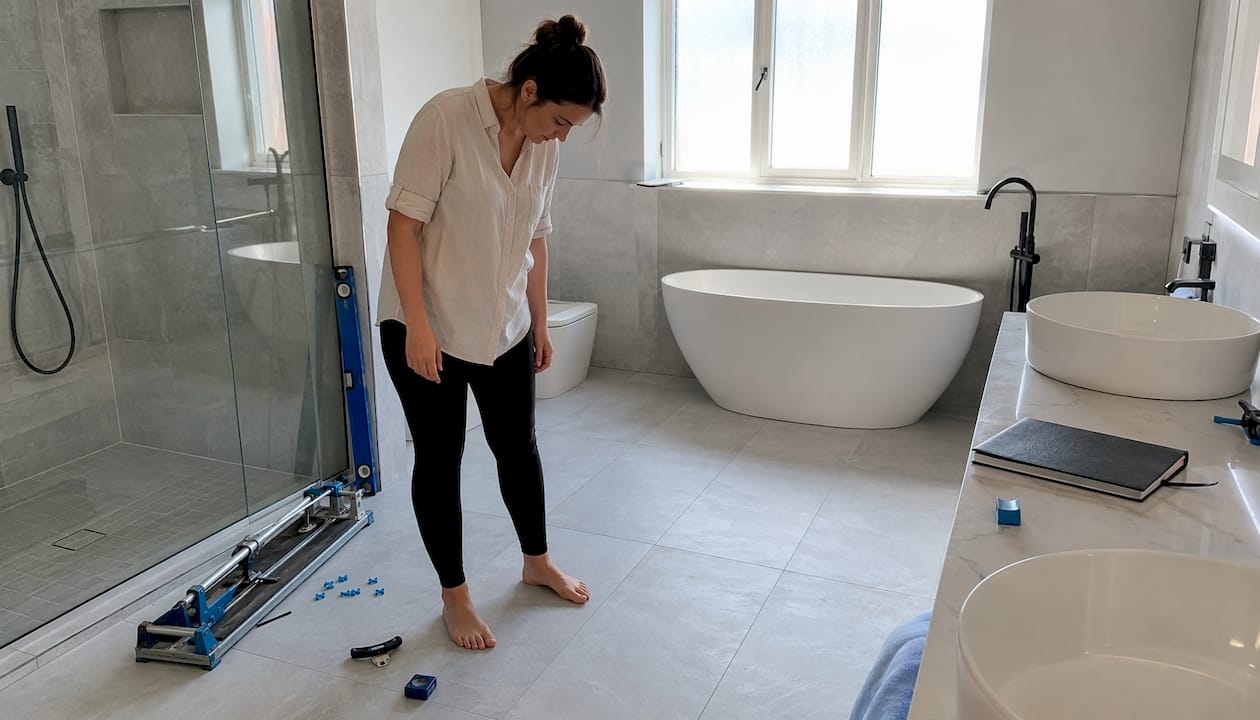
Porcelain tile is a highly suitable all-round floor for a long-term family bathroom — dense, effectively waterproof, and available in slip-rated finishes that hold up to daily use. For dedicated wet rooms and shower floors, safety-rated products like Altro Aquarius (rated R11 for high-slip-risk wet environments) or small-format porcelain mosaics are the right call. Budget bathrooms, rental units, and utility rooms are where sheet vinyl and LVT earn their place. Jmplumbingservicesltd installs all of these across Cardiff and the Vale of Glamorgan, and the sections below will help you decide which material fits your home before you request a quote.
Quick picks by use-case:
- Family bathroom: porcelain tile over a waterproof membrane
- Wet room or shower floor: Altro Aquarius or small-format porcelain mosaic (R11 or DCOF ≥0.42)
- Budget/rental/laundry: heat-welded sheet vinyl or LVT
- Ensuite with underfloor heating: rectified porcelain with flexible adhesive
- Guest WC: ceramic tile or LVT (more design freedom, lower traffic)
Table of Contents
- What makes porcelain and ceramic tile the go-to bathroom flooring?
- Is LVT or sheet vinyl a good waterproof bathroom floor?
- When does natural stone make sense for a bathroom floor?
- Should you use wood or timber-look flooring in a bathroom?
- When should you specify safety flooring like Altro Aquarius?
- What about resin, epoxy, and polished concrete floors?
- What installation essentials protect your bathroom floor long-term?
- How do you choose the right floor and vet your installer?
- Which floor is right for your home? A Cardiff scenario guide
- Key Takeaways
- The floor finish is the last thing I worry about on site
- Jmplumbingservicesltd installs bathroom floors across Cardiff and the Vale
- Useful sources and product references
What makes porcelain and ceramic tile the go-to bathroom flooring?
Porcelain is fired at higher temperatures than ceramic, making it effectively waterproof by construction due to its very low water absorption. That density also makes it harder to chip or crack under daily punishment. Ceramic costs less and cuts more easily during installation, which suits complex layouts or tighter budgets, but it is less durable under heavy use.
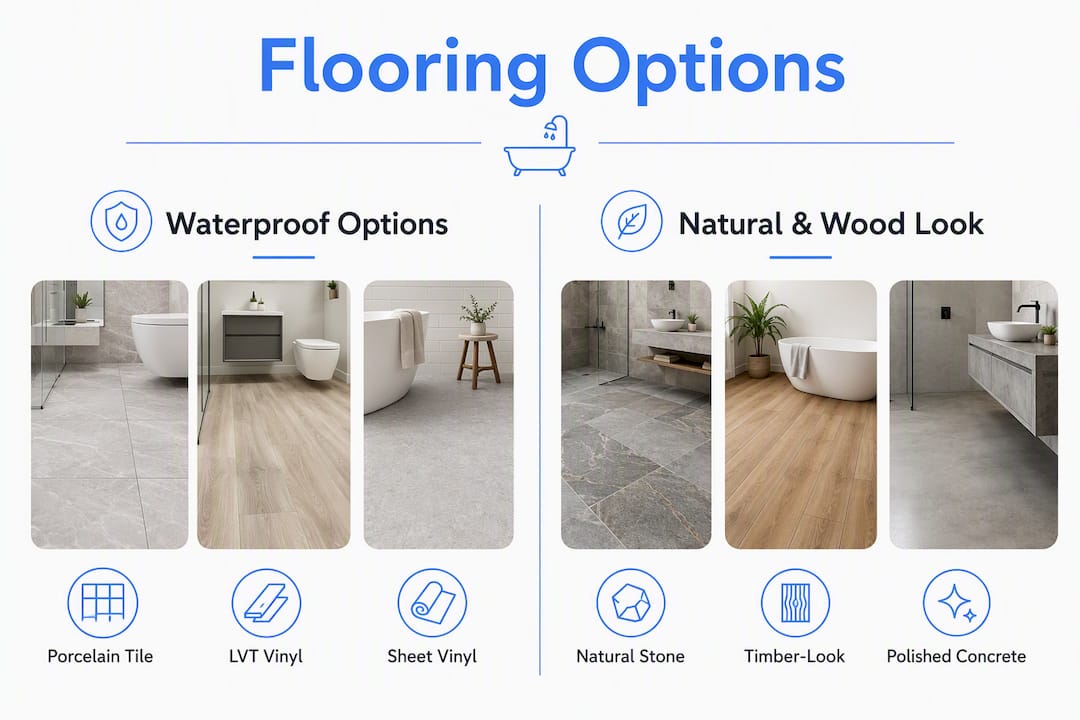
Slip resistance is where finish choice matters most. Matte and textured finishes outperform polished surfaces in wet conditions, and smaller tiles create more grout lines, which adds traction. Ask your installer for the tile’s DCOF (Dynamic Coefficient of Friction) or R-value before committing.
Underfloor heating compatibility requires a level, dry, insulated subfloor and flexible adhesive and grout to accommodate thermal movement. Skipping flexible adhesive is one of the most common reasons tiles crack within a year.
- Porcelain: best for primary bathrooms, shower floors, and wet rooms
- Ceramic: good for guest WCs and lower-traffic areas
- Both: compatible with underfloor heating when installed correctly
- Both: low maintenance, no resealing required
Pro Tip: Ask your installer about tile rectification (precision-cut edges for tighter grout joints), the DCOF or R-rating for your specific tile, and whether a flexible adhesive is specified for the substrate. These three questions separate a competent installer from a cheap one.
Is LVT or sheet vinyl a good waterproof bathroom floor?
Modern luxury vinyl tile (LVT) and its rigid-core variant, SPC (Stone Plastic Composite), are warmer underfoot than tile and easier to install. The planks and tiles themselves are waterproof, but seams remain a potential water entry point, which is why professionals treat LVT as a secondary choice for Zone 1 wet areas like shower floors. For a dry-zone bathroom floor or a guest WC, it performs well and costs less than porcelain.
Sheet vinyl is the stronger waterproofing option of the two. Installed as a single continuous piece and heat-welded at seams with the material coved at least 100mm up the wall, it creates a genuinely water-resistant surface. That makes it the practical pick for laundry rooms, rental properties, and utility bathrooms where cost and durability matter more than aesthetics. Jmplumbingservicesltd’s LVT and vinyl installation service covers both formats.
- LVT/SPC: best for budget primary bathrooms, guest WCs, and warmer-underfoot preference
- Sheet vinyl: best for laundry rooms, rental units, and utility bathrooms
- Neither: suitable as a shower floor without specialist detailing
- Lifespan depends heavily on installation quality, not just product grade
When does natural stone make sense for a bathroom floor?
Stone offers something no manufactured material quite replicates: genuine variation in veining, texture, and color. Marble, slate, and travertine all add resale appeal in larger, luxury bathrooms. The trade-off is porosity. Unsealed stone absorbs water and staining agents, so it needs sealing on installation and periodically thereafter, using pH-neutral cleaners to avoid surface damage.
Slip safety is the other watchpoint. Polished stone finishes significantly increase slip risk when wet — honed or textured finishes are the correct specification for floors. Slate’s natural cleft texture gives it a built-in advantage here.
- Best fit: large luxury bathrooms, en suites, or spaces where aesthetics justify the upkeep
- Avoid polished finishes on floors; specify honed or textured
- Budget for initial sealing and ongoing maintenance with appropriate stone cleaners
- Confirm slip ratings with the supplier before purchase
Should you use wood or timber-look flooring in a bathroom?
Solid hardwood, standard laminate, cork, and real bamboo all absorb moisture and will swell, warp, or develop mold in a bathroom environment. The expert consensus is clear: solid wood should not go in bathrooms due to distortion from humidity, and standard laminate is only water-resistant, not waterproof.
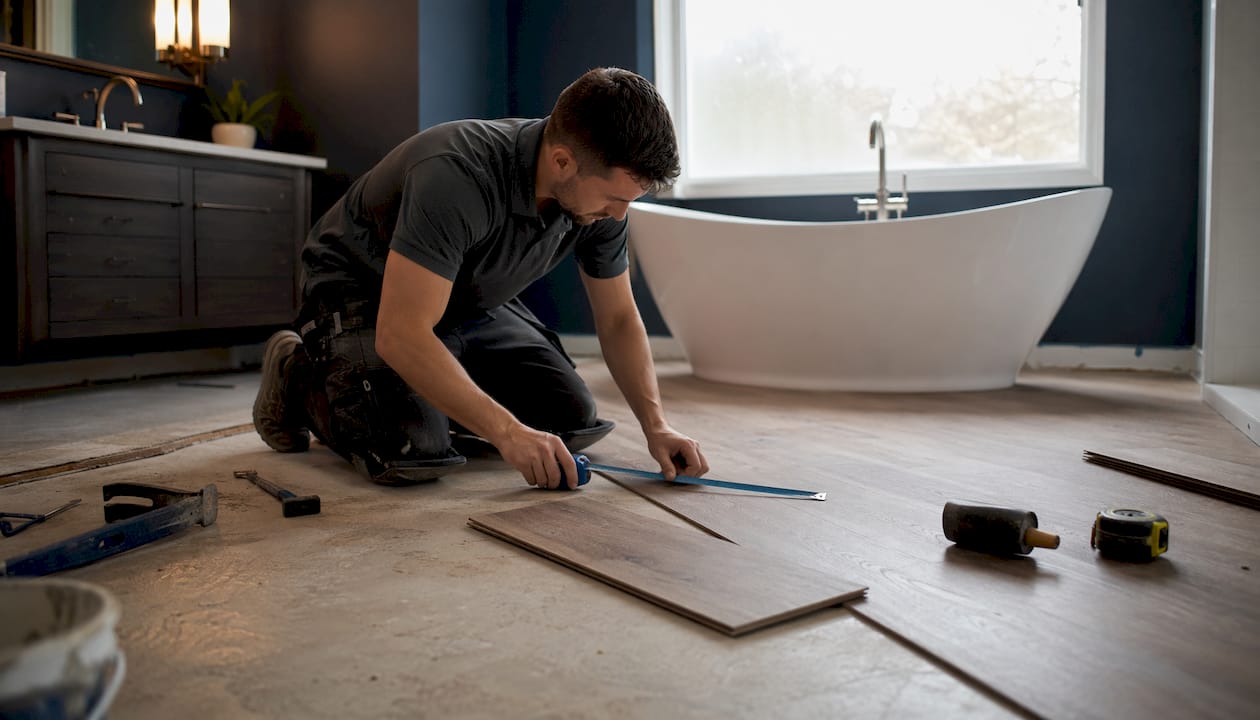
The safe route to a wood look is either wood-look porcelain tile or waterproof LVT/SPC. Both tolerate humidity and occasional water without the structural risks. For more on laminate limitations in wet areas, that resource covers the key technical distinctions worth reading before you decide.
Where timber-look flooring meets a wet zone, the transition needs a proper profile or a tile threshold. Running LVT up to the shower enclosure without a transition detail is a common mistake that leads to water ingress at the edge.
- Solid hardwood and standard laminate: not suitable for bathrooms
- Wood-look porcelain or waterproof LVT/SPC: safe, realistic alternatives
- Always use a transition profile where timber-look meets a wet zone
When should you specify safety flooring like Altro Aquarius?
Standard residential tiles and LVT are designed for typical domestic use. Safety flooring is engineered specifically for environments where wet and dry conditions combine and slip risk is elevated. Altro Aquarius is a 2mm safety floor tested across both shoe types and barefoot use, making it appropriate for dedicated wet rooms, hydrotherapy-style showers, and households where mobility concerns make maximum slip resistance a priority.
R11 slip resistance is the relevant rating for high-risk wet areas. Products carrying this classification have been tested on a ramp-angle test and confirmed suitable for barefoot wet environments.
Ask your installer for the product datasheet and slip-test results before specifying any safety flooring. A verbal assurance is not the same as a documented R-value or DCOF figure.
- Altro Aquarius: suitable for wet rooms, shower floors, and mobility-sensitive households
- R11 classification: appropriate for high-slip-risk wet conditions
- Always request the product datasheet and slip-test documentation
What about resin, epoxy, and polished concrete floors?
Seamless poured systems — microcement, epoxy resin, and polished concrete — appeal to homeowners who want a contemporary, grout-free finish. Polished concrete has high thermal mass and works well with underfloor heating. Microcement achieves the same look at a fraction of the weight, which matters in upper-floor bathrooms.
The catch is installation complexity. These systems require a correctly prepared, stable substrate. Pinholes, cracks, or movement in the base will telegraph through the finish. Specialist installation is non-negotiable, and costs reflect that. For a contemporary Cardiff en suite or open-plan wet room, the result can be striking, but this is not a budget option.
- Best fit: contemporary en suites, open-plan wet rooms, design-led projects
- Requires specialist installation and correct substrate preparation
- Polished concrete pairs well with underfloor heating due to thermal mass
- Budget accordingly: higher material and labour costs than tile or LVT
What installation essentials protect your bathroom floor long-term?
The floor finish is not the waterproofing system. The waterproof membrane beneath the floor is what stops water reaching the subfloor and the structure below. Tiles and grout alone will not do that job. A long-lasting bathroom floor depends first on substrate preparation and a continuous membrane, not on which tile you chose.
Before work starts, a qualified installer should confirm:
- Subfloor is flat, dry, and structurally sound
- A compliant membrane (liquid, sheet, or cementitious) is applied and extended up walls
- Correct falls to the floor waste are built in
- Adhesive and grout are specified for the substrate and any underfloor heating system
- A written warranty covers the waterproofing work
Documents to collect from your installer:
- Product datasheets for membrane, adhesive, and grout
- Proof of trades credentials or relevant qualifications
- Portfolio images of completed wet-room or tiling work
- Written warranty on waterproofing and installation
If a contractor does not mention the membrane during the quote conversation, that is a red flag.
How do you choose the right floor and vet your installer?
Start with your use-case. Wet zone or dry zone? Family bathroom with children, or a guest WC used twice a week? Underfloor heating planned? Mobility concerns in the household? Those four questions narrow the field before you even look at samples.
Questions to ask every installer you quote:
- What membrane system do you specify, and can I see the datasheet?
- Do you have portfolio images of similar wet-room or tiling work?
- What slip rating does this tile or floor carry?
- Is the adhesive flexible and rated for underfloor heating if applicable?
- What written warranty do you provide on the waterproofing?
Red flags during quotes:
- No mention of waterproofing or membrane
- Generic product names with no datasheet available
- No portfolio or local references
- Warranty offered verbally only
For rough cost context, industry guidance places LVT at the lower end of the cost range and porcelain at mid-to-premium, with natural stone and resin systems at the top. A small ensuite retile with membrane typically takes two to four days; a full wet-room conversion runs longer depending on substrate condition.
Which floor is right for your home? A Cardiff scenario guide
- Family bathroom: Porcelain tile over a waterproof membrane. Mid cost. Prioritize a matte, slip-rated finish.
- Ensuite with shower: Porcelain or small-format mosaic in the wet zone; LVT acceptable in the dry zone. Mid cost. Flexible adhesive required if underfloor heating is fitted.
- Dedicated wet room: Safety flooring (e.g., Altro Aquarius R11) or small-format porcelain mosaic. Mid–premium. Membrane up walls, correct falls to drain.
- Downstairs WC: Ceramic tile or LVT. Budget–mid. Lower traffic means more design freedom.
- Rental property: Heat-welded sheet vinyl. Budget. Durable, easy to clean, minimal maintenance.
- Laundry/utility room: Sheet vinyl, coved up the wall. Budget. Continuous surface beats any jointed product here.
Key Takeaways
The single most important decision in any bathroom floor project is the waterproof membrane and substrate preparation, not the finish material you choose.
| Point | Details |
|---|---|
| Porcelain for longevity | Water absorption below 0.5% makes porcelain the most durable long-term choice for family bathrooms. |
| Sheet vinyl for budget waterproofing | Heat-welded sheet vinyl coved 100mm up the wall creates a genuinely waterproof surface for rentals and laundry rooms. |
| Safety flooring for wet rooms | Altro Aquarius (R11-rated) is the right specification for dedicated wet rooms and mobility-sensitive households. |
| Membrane matters most | The waterproof membrane beneath the floor, not the tile or vinyl itself, is what prevents structural water damage. |
| Jmplumbingservicesltd for local installs | Jmplumbingservicesltd installs tiling, LVT, vinyl, and wet-room waterproofing across Cardiff and the Vale of Glamorgan with written warranties. |
The floor finish is the last thing I worry about on site
Most homeowners come to us having spent hours choosing a tile. That is fine — the tile matters. But the jobs that fail, the ones that end up with water under the floor and a call to us six months later, almost never fail because of the tile. They fail because someone skipped the membrane, or laid it without extending it up the walls, or forgot to build a fall to the drain.
The substrate work is invisible once the floor is down. That is exactly why it gets skipped. A homeowner cannot see whether the membrane was correctly lapped at the corners. They cannot tell from a photo whether the adhesive was flexible-rated or standard. The only protection is asking the right questions before the work starts and getting the answers in writing.
What we do differently at Jmplumbingservicesltd is treat the waterproofing as the deliverable, not the tile. The tile is the finish. The membrane, the falls, the substrate prep — that is the work. We carry product datasheets to every site survey and we specify by name, not by generic description. If you are comparing quotes and one contractor cannot tell you which membrane system they use, that tells you something.
Jmplumbingservicesltd installs bathroom floors across Cardiff and the Vale
Cardiff homeowners who want tiling, LVT, sheet vinyl, or a full wet-room conversion done properly have a local option that covers the whole job. Jmplumbingservicesltd handles substrate preparation, waterproof membrane installation, tiling, LVT and vinyl fitting, and underfloor heating prep as part of a complete bathroom installation, not as add-ons bolted onto a basic quote.
Every project comes with a written warranty on the waterproofing and installation. The team covers Cardiff, Penarth, Barry, Cowbridge, Dinas Powys, Rhoose, and the wider Vale of Glamorgan. To get a site survey and a detailed scope with timeline, visit the Cardiff bathroom installation page or book a bathroom renovation quote directly.
Useful sources and product references
Homeowners and installers can verify product specifications and technical guidance through these primary sources. Ask your contractor to produce datasheets for any product listed by name in your quote.
- Altro Aquarius product page — slip-resistance data, R-value classification, and suitability guidance for wet environments: altro.com
- The Flooring Centre — waterproof bathroom flooring guide — technical grounding on membrane importance, LVT limitations, and sheet vinyl detailing: theflooringcentre.com.au
- Bathify bathroom flooring guide — cost comparisons and material recommendations including slip-finish guidance: bathify.com
- B&Q bathroom flooring buying guide — lifestyle-based material selection and slip-resistance guidance for UK homeowners: diy.com
- Self-Build bathroom flooring guide — underfloor heating compatibility, material comparisons, and installation advice: self-build.co.uk
- Topps Tiles — LVT information — waterproof core clarification and underfloor heating compatibility for LVT products: toppstiles.co.uk
- HGTV bathroom flooring styles — finish selection and slip-resistance guidance including warnings against polished surfaces: hgtv.com
Ask your installer to produce the product datasheet and slip-test documentation for any membrane, adhesive, and floor finish specified in your quote. General information is not a substitute for professional advice on your specific project.